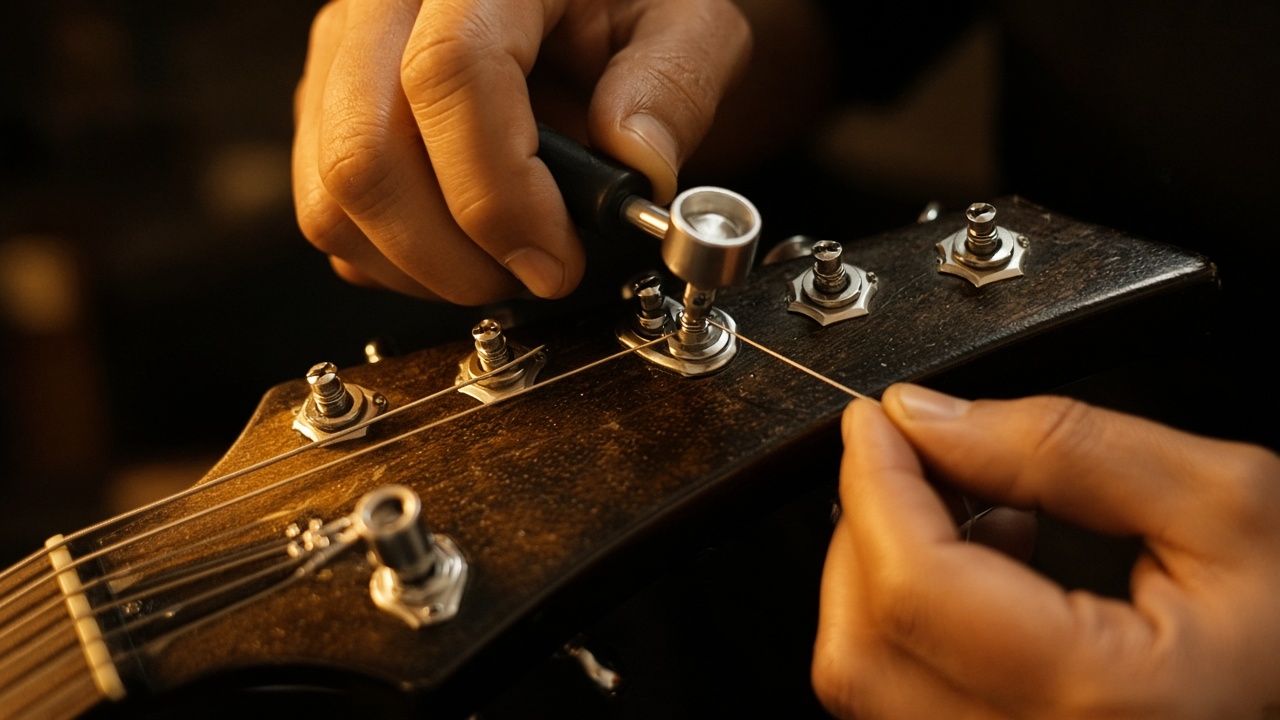
How Often Should You Change Guitar Strings? (And Do Strings Expire?)
Short answer: change uncoated strings when they sound dull, feel rough or will not stay in tune - for a practising beginner that is typically a matter of weeks-to-a-few-months per set, sooner if you play daily. Coated strings (our beginner pick in the strings guide) are built to stretch that interval several-fold. We give signs and patterns, not a fake-exact calendar - hands, sweat and climate decide.
Do strings expire?
Unopened strings do not expire like food, but uncoated steel corrodes slowly in humid or salty air - a packet kept for years in a damp room can come out tarnished. Store spares dry, in their sealed packets, and use oldest first. Strings already on the guitar 'expire' by playing: skin oil and fret wear kill brightness long before a string breaks.
The change-it signs
- Tone goes tubby, especially the wound strings.
- Visible darkening or rough feel under the fingers.
- Tuning will not settle, or intonation sounds off up the neck.
- A string breaks - change the set, not just the one (its neighbours are the same age).
What to buy next: best strings for beginners, coated vs uncoated, gauge guide. Keep a spare set in the case - it ranks #3 on our what-to-buy-first order.
FAQ
Does changing strings improve a cheap guitar?
Fresh strings are the cheapest tone upgrade any guitar can get - dull strings make good guitars sound cheap.