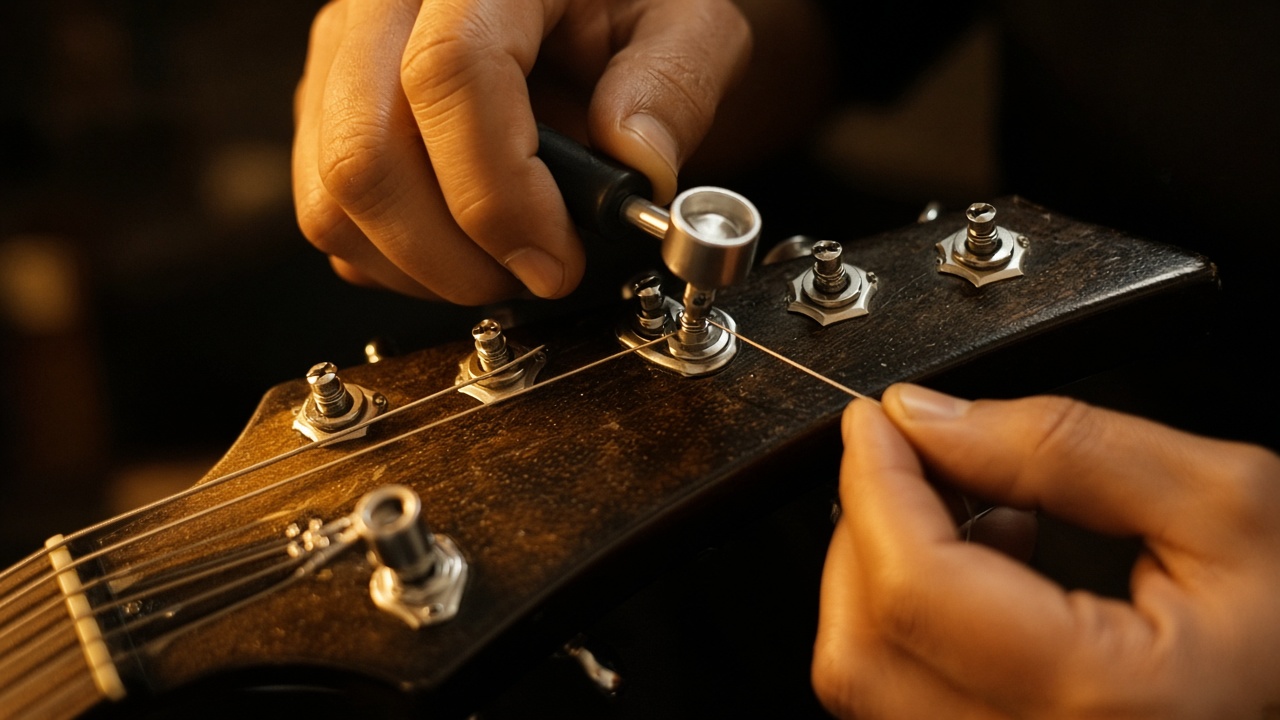
Guitar Strings Rusting Fast? Why, How to Slow It, What to Buy
Strings that turn dark, rough or orange-spotted within weeks are reacting to moisture plus the salts and oils from your hands. It is common, it is not a flaw in you or the guitar, and the fix is a free routine plus the right string type.
Editorial guide built from manufacturer instructions and specs - not hands-on testing. Product cards link to Amazon; we never show Amazon prices here.
Quick answer
Wash and dry your hands before playing, wipe the strings with a dry microfiber cloth after every session (undersides too), and keep the guitar out of humid rooms. Strings that are already rusty should be replaced, not scrubbed. If you still kill sets fast, switch to coated strings, which their makers design specifically to resist corrosion.
Take the lesson finder quiz
Prices last checked: Oct 2026 where a verified price is shown on a card - confirm at checkout. Editorial from published facts, not hands-on testing: How we rate.
Why strings rust (and why some players rust them faster)
Steel cores and windings corrode when moisture and salts sit on them. Sweat contains both, and the amount varies a lot between people, so two players can kill the same set at very different speeds. Humid rooms, bathrooms, basements, coastal air and leaving the guitar out in a damp space all speed it up. Rust usually appears first where your hands touch most: the wound strings over the frets you use and the area where you pick or strum.
Rusty, or just dirty?
Dark grey grime that wipes off on a cloth is dirt and skin oil. Orange-brown spots, a gritty feel when you slide a finger along the string, or visible pitting are corrosion. Fender's replace-them list: strings that feel or sound dead, are discoloured or flaking, or will not stay in tune. Corroded strings feel draggy, tune less reliably, sound dull (see guitar sounds dull) and break more easily (string keeps breaking).
Can you remove rust from guitar strings? Replace them.
You can rub surface discolouration off, but corrosion has already pitted the metal and changed its mass along the length, so the string will not sound or intonate like new - and abrasives near your frets and pickups create more problems than they solve. A fresh set is the real fix: restring an acoustic or restring an electric. The routine below is what makes the next set last.
The routine that slows rust (free)
- Wash and dry your hands before you play - the single biggest change for most fast-rusters.
- Wipe before and after every session with a dry cloth (string-cleaner wipes and string lubricants exist as an optional extra): pinch each string in the cloth and run it the full length, then slide the cloth under the strings to wipe their undersides.
- Store sensibly: in a case or a room that is not humid - never a bathroom or damp basement. See how to store a guitar.
- Cold guitar coming indoors? Let it warm up in its closed case first so moisture does not condense on the strings.
- Very humid climate? Taylor suggests silica gel packs in the case for year-round high humidity, changed every few months, or a room dehumidifier.
- Do not douse strings in household sprays or oils; they migrate onto the fretboard and finish.
The one tool this routine needs is a clean, dry microfiber cloth kept in the case:
Illustration - AI-generated, not a photo of the exact product.
StarterD'Addario Micro-Fiber Polishing Cloth
The cheapest care habit there is: wipe strings and body after playing to slow corrosion and grime
No list price listed here - we only publish prices we verified on a manufacturer/retailer page. Check the maker and Amazon for current pricing.
Microfiber polishing cloth for guitar finishes and strings wipe-downs
Maker/retailer source for the price & specs above (citation, not a buy link): D'Addario
See price on Amazon
As an Amazon Associate, FretCompare earns from qualifying purchases. Price shown only on Amazon.
Prices last checked: Oct 2026 where a verified price is shown on a card - confirm at checkout. Editorial from published facts, not hands-on testing: How we rate.
Best strings for sweaty hands: coated sets
If the routine is not enough, coated strings are the direct answer. Elixir coats its wound strings - including the gaps between the windings, where grime collects - and gives its plain strings an anti-rust plating, to protect against sweat, humidity and corrosion (per Elixir). Elixir positions NANOWEB as the smoother feel and OPTIWEB as closer to uncoated. They cost more per set, but if you currently bin a rusted set every few weeks, the maths often favours coated. Our coated vs uncoated page goes deeper. Electric players: the first two cards. Acoustic players: the last two (phosphor bronze or 80/20 bronze, same light 12-53 gauge).
Sources checked Oct 19, 2026: Elixir FAQ and coating pages, D'Addario on rust and when to change, Taylor on humid-climate storage, Fender on when to change strings.
Illustration - AI-generated, not a photo of the exact product.
Our pickElixir Electric NANOWEB Light .010-.046 (12052)
Our pick if .009s feel too slinky: the standard .010 electric gauge with coated life
No list price listed here - we only publish prices we verified on a manufacturer/retailer page. Check the maker and Amazon for current pricing.
Nickel-plated steelNANOWEB coatingbright tonesmooth feel (per Elixir)
Maker/retailer source for the price & specs above (citation, not a buy link): Elixir
See price on Amazon
As an Amazon Associate, FretCompare earns from qualifying purchases. Price shown only on Amazon.
Illustration - AI-generated, not a photo of the exact product.
Our pickElixir Electric OPTIWEB Light .010-.046 (19052)
Players who want uncoated feel and bend control, but coated tone life
No list price listed here - we only publish prices we verified on a manufacturer/retailer page. Check the maker and Amazon for current pricing.
Nickel-plated steelOPTIWEB coatingcrisp tone and naturalgrippier feel (per Elixir)
Maker/retailer source for the price & specs above (citation, not a buy link): Elixir
See price on Amazon
As an Amazon Associate, FretCompare earns from qualifying purchases. Price shown only on Amazon.
Illustration - AI-generated, not a photo of the exact product.
Our pickElixir Acoustic Phosphor Bronze NANOWEB Light .012-.053 (16052)
Our pick for most acoustic beginners: warmth plus sparkle, and months between changes
No list price listed here - we only publish prices we verified on a manufacturer/retailer page. Check the maker and Amazon for current pricing.
Phosphor bronze wrapNANOWEB coatingrich and full tonesmooth feel (per Elixir)
Maker/retailer source for the price & specs above (citation, not a buy link): Elixir
See price on Amazon
As an Amazon Associate, FretCompare earns from qualifying purchases. Price shown only on Amazon.
Illustration - AI-generated, not a photo of the exact product.
Our pickElixir Acoustic 80/20 Bronze NANOWEB Light .012-.053 (11052)
Brighter, more bell-like acoustic voice - great if your guitar sounds dark
No list price listed here - we only publish prices we verified on a manufacturer/retailer page. Check the maker and Amazon for current pricing.
80/20 bronze wrap (80% copper/20% zinc)NANOWEB coatingbright and livelyfocused tone (per Elixir)
Maker/retailer source for the price & specs above (citation, not a buy link): Elixir
See price on Amazon
As an Amazon Associate, FretCompare earns from qualifying purchases. Price shown only on Amazon.
Prices last checked: Oct 2026 where a verified price is shown on a card - confirm at checkout. Editorial from published facts, not hands-on testing: How we rate.
FAQ
Why are my guitar strings rusting so fast?
Moisture plus the salts and oils from your hands sitting on the steel. Some people's sweat corrodes strings much faster than others'. Humid storage adds to it.
How do I stop my guitar strings from rusting?
Wash and dry hands before playing, wipe the strings (including underneath) with a dry cloth after every session, keep the guitar out of humid rooms, and use coated strings if you still rust sets quickly.
Can I remove rust from guitar strings?
Not in a way that restores them. Corrosion pits the metal, so the string will not sound or tune like new. Replace the set.
Do coated strings stop rust?
Their makers design them to resist corrosion and grime. They slow it rather than make strings last forever; wiping down still helps.
Is it bad to play rusty strings?
Not dangerous, but they sound dull, feel rough, tune less reliably and break more often.
Strings & care guides: Restring an acoustic - Restring an electric - Clean a fretboard - Strings rusting - String keeps breaking - Dull or dead tone - How to store a guitar - Strings guide - Coated vs uncoated
 ILLUSTRATION