How to Restring an Electric Guitar (Trem & Locking Tuners Too)
Electrics restring faster than acoustics - no bridge pins - but the bridge type changes the order of operations. Find your bridge below, then follow the shared tuner steps.
Editorial guide built from manufacturer instructions and specs - not hands-on testing. Product cards link to Amazon; we never show Amazon prices here.
Quick answer
Identify your bridge (string-through, stop tailpiece, or tremolo), feed the new string from the bridge end, leave about 5-7cm (2-3in) of slack past the post (much less with locking tuners), wind 2-3 wraps on wound strings and 3-5 on plain ones, then stretch and retune. On a tremolo, change strings one at a time so the bridge stays balanced.
Take the lesson finder quiz
Prices last checked: Oct 2026 where a verified price is shown on a card - confirm at checkout. Editorial from published facts, not hands-on testing: How we rate.
Before you start: which bridge do you have?
| Bridge | Where the string goes in | Watch out for |
|---|
| String-through body (Telecaster, many hardtails) | Through the back of the body, out through the bridge plate | Fishing the end through the ferrule - push, do not force |
| Stop tailpiece + Tune-o-matic (Les Paul, SG style) | Through the tailpiece, over the saddles | With all strings off, the tailpiece and bridge are free to lift off - keep a hand on them, or change one at a time |
| Strat-style tremolo (vintage or 2-point) | Through the back of the body into the trem block, up through the bridge | The bridge tilts as tension changes; change one string at a time |
| Locking (Floyd Rose-type) tremolo | String end clamped in the saddle; locking nut at the headstock | A different procedure: loosen the locking-nut clamps at the headstock first, snip the ball end off, clamp the plain end in the saddle with the correct hex key, tune at the headstock, fine-tune at the bridge, then re-clamp the nut last. Changing one string at a time keeps the bridge balanced. If you have never done it, have a tech show you once |
Step by step: fixed bridges (string-through and stop tailpiece)
- Slacken a string until floppy; cut or unwind it. Never cut at tension.
- Feed the new string from the bridge end until the ball end seats in its ferrule or tailpiece hole.
- Pull it to its tuner, pull back about 5-7cm (2-3in) of slack, thread the post and kink the end against the post.
- Wind so the wraps stack downward on the post: about 2-3 wraps on wound strings, 3-5 on plain strings (they slip more).
- Check the string sits in its saddle groove and nut slot, then tune up to pitch (if you overshoot, drop below and come back up).
Details that save frustration: identify each string from the packet or ball-end colour; pull it through the bridge with your fingers guiding it so it does not grind on the hole; take out any twists before tensioning; on 3+3 headstocks the treble strings wind the opposite way to the bass strings so every string leaves toward the inside; and make sure the B and high E sit under any string trees on the headstock. On through-hole tuners, roughly the distance to the next post of slack (or Sweetwater's 1-2in past the post) is a good start.
Vintage-style split-shaft tuners (slotted posts with a hole in the top, common on vintage-style Fenders) work differently: cut the string to length first - roughly 2-3in past the post - push the end down into the centre hole, bend it into the slot and wind. Lock the string with the first wrap over the loose end and the rest under it on standard tuners for extra grip.
On a Les Paul-style guitar the bridge and tailpiece are held in place only by string tension. If you remove everything to clean the board, note which way the bridge faces before it moves so it goes back the same way.
Strat-style tremolo: one string at a time
A tremolo bridge balances string tension against springs in the back cavity. Take all six strings off and the bridge tips forward; put them back and you chase pitch for ten minutes. Changing one string at a time keeps the balance, so the guitar stays close to pitch throughout. Feed each string through the back of the body into the trem block (a slight bend near the ball end helps it through) and up through the saddle, then follow the tuner steps.
A gauge change moves the balance: a heavier set pulls the bridge forward. Adjusting the spring claw screws is a reasonable home job but it is iterative; if the bridge ends up tilted and you are unsure, see a tech. On Floyd Rose-type locking systems, do not loosen the nut clamps or cut ball ends until you know the procedure for your bridge.
Locking tuners: less slack, fewer wraps
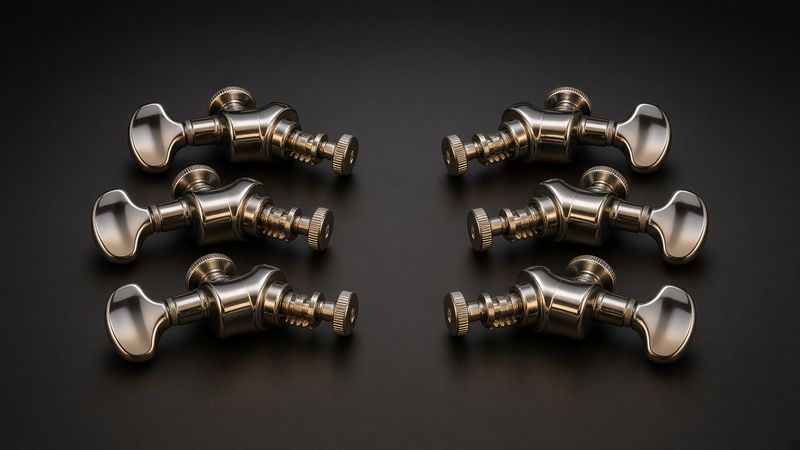
Locking tuners clamp the string inside the post, so wraps are not needed for grip. Pull the string taut through the post, tighten the locking wheel or knob, then tune up: aim for under one full wrap. Less string on the post means less to stretch, and changes go much faster.
Honest note: they remove slipping at the post, but they do not fix tuning problems caused by the nut, the tremolo or new-string stretch. If tuning stability is why you want them, read why your guitar won't stay in tune first. Check post-hole size, layout (3+3 or 6-in-line) and screw positions against your headstock before buying - fit varies by model.
Illustration - AI-generated, not a photo of the exact product.
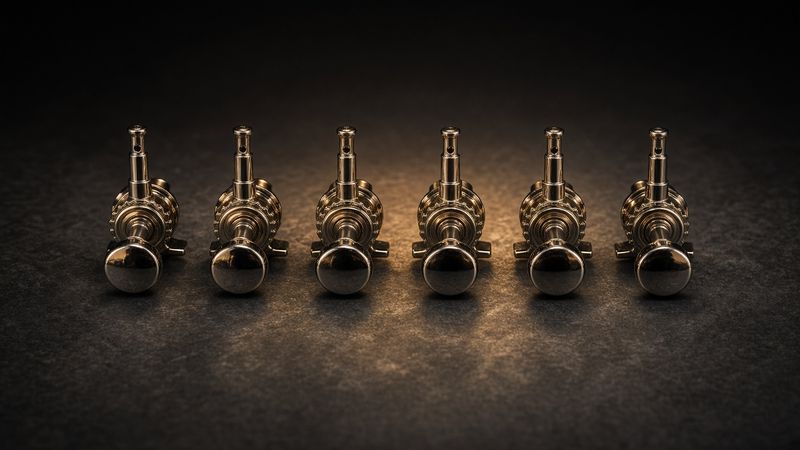
SeriousGrover Roto-Grip Locking Rotomatics (502, 3+3)
Tech-or-confident job: faster string changes and tuning stability on 3+3 headstocks
No list price listed here - we only publish prices we verified on a manufacturer/retailer page. Check the maker and Amazon for current pricing.
Locking 18:1 tuners3+3 headstocks25/64in post holes (per Grover listings)
Maker/retailer source for the price & specs above (citation, not a buy link): Grover
See price on Amazon
As an Amazon Associate, FretCompare earns from qualifying purchases. Price shown only on Amazon.
Illustration - AI-generated, not a photo of the exact product.
Step-upFender Locking Tuners (Strat/Tele style)
Confident DIY on compatible Fenders; verify fit before ordering
No list price listed here - we only publish prices we verified on a manufacturer/retailer page. Check the maker and Amazon for current pricing.
Locking replacement tuners for many Fender 6-in-line headstocks - check post/bushing fit for your model year
Maker/retailer source for the price & specs above (citation, not a buy link): Fender
See price on Amazon
As an Amazon Associate, FretCompare earns from qualifying purchases. Price shown only on Amazon.
Prices last checked: Oct 2026 where a verified price is shown on a card - confirm at checkout. Editorial from published facts, not hands-on testing: How we rate.
Stretch, tune, trim
Gently lift each string a few centimetres off the board along its length, retune, and repeat 3-4 times. Trim the ends about 5mm past the post, cut end pointed away from your eyes. If strings keep pinging or sticking as you tune, a little nut lubricant in the slots helps (Fender's setup guides also suggest a drop of light oil where strings cross the saddles). Do not tune sharp to speed stretching - it stresses strings and is a classic cause of a snapped high E (see string keeps breaking). If notes up the neck now seem off, run the 12th-fret test in guitar intonation fix.
Tools and strings for this job
A winder is the one tool that pays for itself on an electric. For strings, stay with the gauge your guitar was set up for - many electrics ship with 9-42 or 10-46; check your maker's spec if unsure, or use our string gauge finder.
Sources checked Oct 19, 2026: Fender setup guidance, StewMac and D'Addario restringing guides, Sweetwater electric restringing guide, Floyd Rose string-change guides.
Illustration - AI-generated, not a photo of the exact product.
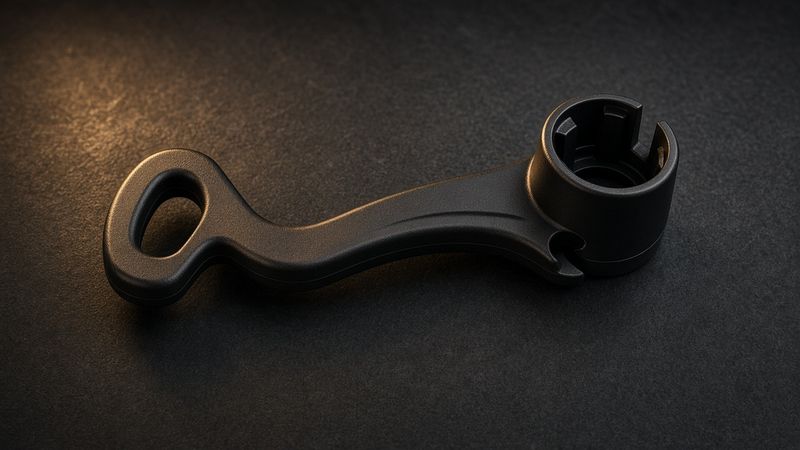
StarterD'Addario Pro-Winder (winder + cutter + pin puller)
The one restringing tool every case should contain
$12.99
Manufacturer/retailer list price (not an Amazon price): D'Addario product page - checked 2026-10-18. Confirm before buying.
String winderhardened-steel string cutter and acoustic bridge-pin puller in one tool (per D'Addario)
Maker/retailer source for the price & specs above (citation, not a buy link): D'Addario
See price on Amazon
As an Amazon Associate, FretCompare earns from qualifying purchases. Price shown only on Amazon.
Illustration - AI-generated, not a photo of the exact product.
StarterD'Addario EXL110 XL Nickel .010-.046 (electric)
D'Addario's best-selling electric set since 1974 - a safe uncoated default
No list price listed here - we only publish prices we verified on a manufacturer/retailer page. Check the maker and Amazon for current pricing.
Nickel-plated steel wraphex corebright versatile toneuncoated (per D'Addario)
Maker/retailer source for the price & specs above (citation, not a buy link): D'Addario
See price on Amazon
As an Amazon Associate, FretCompare earns from qualifying purchases. Price shown only on Amazon.
Illustration - AI-generated, not a photo of the exact product.
StarterErnie Ball Regular Slinky 2221 .010-.046 (electric)
The classic uncoated electric benchmark - cheaper per pack, change more often
No list price listed here - we only publish prices we verified on a manufacturer/retailer page. Check the maker and Amazon for current pricing.
Nickel-wound electric strings.010-.046uncoated
Maker/retailer source for the price & specs above (citation, not a buy link): Ernie Ball
See price on Amazon
As an Amazon Associate, FretCompare earns from qualifying purchases. Price shown only on Amazon.
Illustration - AI-generated, not a photo of the exact product.
StarterFender Original 150R Pure Nickel .010-.046 (electric)
Warmer, mellower electric tone than nickel-plated sets
No list price listed here - we only publish prices we verified on a manufacturer/retailer page. Check the maker and Amazon for current pricing.
Pure nickel wound stringsregular .010-.046warmer vintage toneuncoated
Maker/retailer source for the price & specs above (citation, not a buy link): Fender
See price on Amazon
As an Amazon Associate, FretCompare earns from qualifying purchases. Price shown only on Amazon.
Illustration - AI-generated, not a photo of the exact product.
Our pickElixir Electric NANOWEB Light .010-.046 (12052)
Our pick if .009s feel too slinky: the standard .010 electric gauge with coated life
No list price listed here - we only publish prices we verified on a manufacturer/retailer page. Check the maker and Amazon for current pricing.
Nickel-plated steelNANOWEB coatingbright tonesmooth feel (per Elixir)
Maker/retailer source for the price & specs above (citation, not a buy link): Elixir
See price on Amazon
As an Amazon Associate, FretCompare earns from qualifying purchases. Price shown only on Amazon.
Prices last checked: Oct 2026 where a verified price is shown on a card - confirm at checkout. Editorial from published facts, not hands-on testing: How we rate.
FAQ
How do you restring an electric guitar with a whammy bar?
Change one string at a time so the tremolo stays balanced. Feed each new string through the back into the trem block, up over its saddle, then wind it at the tuner. A heavier gauge may tilt the bridge; spring adjustment is iterative, so ask a tech if unsure.
How many wraps should an electric guitar string have?
About 2-3 on wound strings and 3-5 on plain strings with standard tuners. With locking tuners, under one wrap.
Do I need to take all the strings off to restring?
No. One at a time is easiest and is the right choice on tremolos. On a Les Paul style guitar, removing all strings frees the bridge and tailpiece, so note their orientation.
Do locking tuners keep a guitar in tune?
They stop string slippage at the post and make changes faster. They do not fix nut binding, tremolo return or new-string stretch.
Why does my high E break when restringing?
Usually tuning past pitch, a sharp burr at the saddle, or a kink at the post. See our string keeps breaking guide.
Strings & care guides: Restring an acoustic - Restring an electric - Clean a fretboard - Strings rusting - String keeps breaking - Dull or dead tone - How to store a guitar - Won't stay in tune - Strings guide - Tools & care kit
 ILLUSTRATION