Why Your Guitar Won't Stay in Tune - and How to Fix It
A guitar that drifts flat every few minutes makes beginners think they bought a dud. Usually they bought new strings. This page works the causes in the order they actually happen - stretching, winding, nut friction, the room, old strings, and only at the end, the tuners themselves - with every fix that costs nothing first.
Editorial guide from manufacturer facts and standard practice - not hands-on testing. Prices shown are manufacturer list prices we verified; where a maker lists none, the card says so instead of guessing.
Quick answer
New strings that have not been stretched in cause most tuning drift - stretch them, tune, repeat for a day before blaming the guitar. After that, check in order: sloppy wraps on the tuner posts, a string binding in its nut slot (free pencil-graphite fix), a room that warms or cools the guitar, worn-out strings, and only finally worn tuner gears. A clip-on tuner makes every step quicker, but the fixes themselves are mostly free.
Take the gear-fit quiz
Prices last checked: Oct 2026 where a verified price is shown on a card - confirm at checkout. Editorial from published facts, not hands-on testing: How we rate.
Why does my new guitar keep going out of tune?
Because almost every new guitar arrives with almost-new strings, and new strings are elastic in the worst way: under tension they keep stretching at the windings and the ball end keeps seating, so each string creeps flat again minutes after you tune it. This settles - typically over the first day or two of playing - and it settles much faster if you stretch the strings in deliberately instead of waiting.
The stretch method (free, five minutes): tune the guitar to pitch. Then, one string at a time, hook a fingertip under the string around the middle of the neck and lift it gently away from the fretboard - a firm pull, not a yank - a few times along its length, then retune. Repeat the pull-and-retune cycle two or three times per string; you will feel the string stop dropping as far each time. Finish by playing normally and re-checking in ten minutes. Do this after every restring, on every guitar, for the rest of your playing life - it is the single habit that separates "always out of tune" from "stable". If a string still will not settle after days of this, check the wraps and the nut below before suspecting the tuners.
Why does my guitar go out of tune after changing strings?
Beyond stretching, restring day introduces its own fault: the way the string is wound on the post. Too many wraps, overlapping wraps, or a wrap that rides up the post all keep micro-settling under tension, and the string goes flat in small steps - often one string worse than the rest, which is your clue. The tidy standard method, described so you can picture it: bring the string through the post hole with modest slack (roughly the distance to the next post or two is the common guide), kink it back on itself, and wind down the post so each new wrap sits neatly below the last, ending with two to three tidy wraps and the string leaving the post from the bottom of the stack. Wraps should touch but never climb over each other. A string winder makes this faster and tighter - it is a $13 convenience, not a tuning cure, but at restring time it is the most-used tool in most players' cases. If tuning jumps in little jerks as you turn the peg - sharp, then sharper - that is rarely the post at all; it is the string sticking in the nut, which is next.
The nut: the silent culprit (and the free pencil fix)
Each string sits in a slot in the nut at the top of the neck. If the slot is a touch tight or rough for the string, tension builds unevenly: the length between nut and tuner ends up tighter than the length you play, until the string suddenly slips through with a little "ping" and jumps sharp - or sags flat as you play. Bending strings and using a tremolo make it worse, which is why "it goes out of tune when I bend" almost always points here. The traditional free fix is graphite: with the string lifted out of its slot, scribble a soft pencil into the slot so the groove gets a dusting of graphite, then reseat the string. Graphite is a dry lubricant, it costs a pencil, and it genuinely resolves a large share of nut binding. Keep strings tidy while you are there: our strings guide shows what a healthy set looks like, and a string that is old, kinked at the nut, or corroded will not hold tune no matter what you lubricate.
Temperature, humidity, and the warm-hands effect
Steel strings and wooden necks expand and contract at different rates, so a guitar tuned in a cold room goes sharp or flat as it warms against your body, under stage lights, or when the heating kicks in. Acoustics, with more exposed wood, move more than electrics. This is not a fault and no product fixes physics: tune after the guitar has been in the room (and in your hands) for a few minutes, expect a small correction, and store the guitar away from radiators and sunny windows. It is also why tuning before every session is normal maintenance, not a warning sign. Persistent seasonal movement plus buzzing or high action is the humidity story, covered in our care and humidifiers page and the fret buzz guide.
Old strings will not hold a tune - or play in tune
As strings age they wear unevenly, corrode, and lose the uniform mass that makes a string vibrate truly. The result is a set that can be tuned open but plays out of tune up the neck, and drifts between sessions. If your strings look dull and feel rough, no winding trick saves them - replace them, stretch the new set in properly, and judge the guitar again. Our string-change timeline and the free string gauge finder (gauge changes alter tension and tuning behaviour too) are the two links you need. One related impostor: a guitar that is in tune open but sharp at the 12th fret has an intonation issue, not a tuning-stability issue - different fix: work our guitar intonation fix (fresh strings, 12th-fret test, saddle rule) rather than stretching anything, and one more reason a good tuner (below) earns its place, since you cannot check what you cannot measure.
Why does my electric guitar keep going out of tune?
All of the above, plus friction points electrics add. Tremolo (whammy) systems move the strings across the nut and string trees with every dip, so any binding there shows up immediately as a string returning sharp or flat. Locking nuts and well-cut nuts exist precisely because of this. Locking tuners (next section) genuinely help tremolo guitars by removing post-wrap slippage from the equation, and tidy wraps matter double here. Also check the boring things: a loose tuner bushing you can turn by hand, a worn gear that slips under load, or one string tree bent down hard on the string. Our electric guitars guide and replacement parts guide show what you are inspecting - including our honest take that machine-head swaps are "confident DIY only" because posts and screw patterns must match.
When locking tuners genuinely help - and when they won't
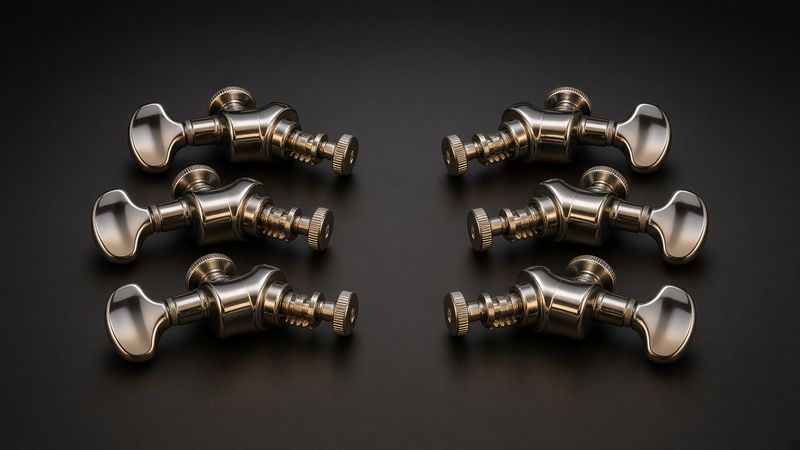
Locking tuners clamp the string inside the post instead of relying on wraps. They fix exactly one cause on this page - string slippage and settling at the post - and as a bonus they make restrings much faster, which encourages the fresh strings your guitar may actually need. They do not stretch new strings for you, do not lubricate a binding nut, and do not repair a worn gear elsewhere. So the honest order is: stretch, wraps, graphite, room, strings - and only if the guitar still drifts (or you restring weekly and hate winding), locking tuners are a fair upgrade. The two catalog sets below are shown with our standard no-price treatment because we have not verified a current maker list price for them; measure your post holes and screw pattern before ordering any tuner set, per our parts guide.
The small products that honestly help
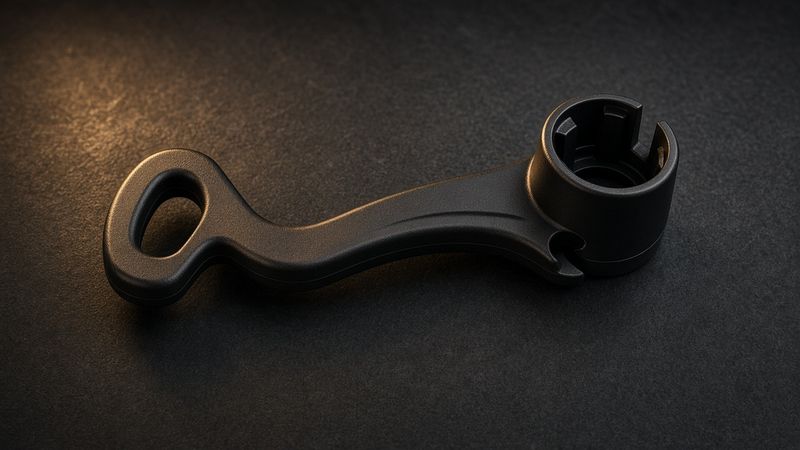
A string winder (the Pro-Winder below also cuts strings and pulls acoustic bridge pins) turns a sloppy ten-minute restring into a tidy three-minute one - and tidy wraps are a real tuning fix, which is why a winder, of all things, belongs on this page. A clip-on tuner makes the stretch-tune-repeat cycle fast enough that you will actually finish it, and lets you check tuning at the 12th fret as well as open. Everything else on this page was free, which is the point: spend the $13 and $23 only after the free list stops working.
Illustration - AI-generated, not a photo of the exact product.
StarterD'Addario Pro-Winder (winder + cutter + pin puller)
The one restringing tool every case should contain
$12.99
Manufacturer/retailer list price (not an Amazon price): D'Addario product page - checked 2026-10-18. Confirm before buying.
String winderhardened-steel string cutter and acoustic bridge-pin puller in one tool (per D'Addario)
Maker/retailer source for the price & specs above (citation, not a buy link): D'Addario
See price on Amazon
As an Amazon Associate, FretCompare earns from qualifying purchases. Price shown only on Amazon.
Illustration - AI-generated, not a photo of the exact product.
Step-upD'Addario Micro Universal Tuner (NS Micro)
Tiny and discreet: lives on the headstock, readable from front or behind - the always-there tuner
$22.99
Manufacturer/retailer list price (not an Amazon price): D'Addario product page (re-checked 2026-10-18) - checked 2026-10-18. Confirm before buying.
Clip-on headstock tunerreversible multi-color displaydual-swivel mount410-480Hz calibration range (per D'Addario)
Maker/retailer source for the price & specs above (citation, not a buy link): D'Addario
See price on Amazon
As an Amazon Associate, FretCompare earns from qualifying purchases. Price shown only on Amazon.
Illustration - AI-generated, not a photo of the exact product.
Step-upFender Locking Tuners (Strat/Tele style)
Confident DIY on compatible Fenders; verify fit before ordering
No list price listed here - we only publish prices we verified on a manufacturer/retailer page. Check the maker and Amazon for current pricing.
Locking replacement tuners for many Fender 6-in-line headstocks - check post/bushing fit for your model year
Maker/retailer source for the price & specs above (citation, not a buy link): Fender
See price on Amazon
As an Amazon Associate, FretCompare earns from qualifying purchases. Price shown only on Amazon.
Illustration - AI-generated, not a photo of the exact product.
SeriousGrover Roto-Grip Locking Rotomatics (502, 3+3)
Tech-or-confident job: faster string changes and tuning stability on 3+3 headstocks
No list price listed here - we only publish prices we verified on a manufacturer/retailer page. Check the maker and Amazon for current pricing.
Locking 18:1 tuners3+3 headstocks25/64in post holes (per Grover listings)
Maker/retailer source for the price & specs above (citation, not a buy link): Grover
See price on Amazon
As an Amazon Associate, FretCompare earns from qualifying purchases. Price shown only on Amazon.
Prices last checked: Oct 2026 where a verified price is shown on a card - confirm at checkout. Editorial from published facts, not hands-on testing: How we rate.
Still drifting? The one-week test and the stop-line
Give a settled set of strings one week of daily playing with the fixes above. If one string still wanders while the others hold, the fault is local to that string: its slot, its post, or its tuner - and worn tuner gears are a real thing on older and budget guitars. That is a parts or tech conversation (replacement parts: DIY or tech?), not more stretching. And if the whole guitar will not intonate - open strings agree, fretted notes do not - book a setup rather than buying parts; we do not quote a setup price because we could not verify a standard one.
FAQ
Why does my new guitar keep going out of tune?
Almost always because its strings are new too. Unstretched strings keep creeping flat for the first day or two of playing - that is normal, not a defect. Stretch them in (method below), tune up several times, and judge the guitar only after the strings settle. If it still drifts after a week of daily playing, work down the cause list on this page.
Why does my guitar go out of tune after changing strings?
Three usual reasons: the strings have not been stretched in yet, there are too many loose wraps on the tuner posts so the string keeps settling, or the string is binding in the nut slot and then slipping through in jumps. Stretch, check your wraps look like the tidy method below, and try the free pencil-graphite trick in the nut slots.
Why does my electric guitar keep going out of tune?
The same list, with two electric extras: strings catching at the nut when the tremolo (whammy bar) moves, and loose or sloppy winding at the posts. Hardtail electrics mostly drift from new strings or nut binding; tremolo guitars add the nut and string trees as friction points. Locking tuners help the winding part only - see the honest section below.
Why does my acoustic guitar keep going out of tune?
New strings first, then the room: acoustics move with temperature and humidity more than electrics, so a guitar tuned in a cool room drifts as it warms in your hands or the heating runs. Old strings that will not intonate, and worn tuner gears on older acoustics, come next on the list.
Do locking tuners fix tuning problems?
Only one of them. Locking tuners remove string slippage at the post and make restrings faster - they do nothing for a binding nut, unstretched strings, or worn gears' other problems. If your wraps are already tidy and the nut is the culprit, locking tuners will disappoint you; diagnose the cause first with the free checks.
How often should a guitar need tuning?
Every session, briefly - tuning before you play is a habit, not a symptom. Needing a small correction at the start is normal for every guitar at every price. Needing big corrections every few minutes of playing is the problem this page diagnoses.
Setup hub: Guitar intonation fix (in tune open but wrong up the neck? that page, not this one) - Fret buzz fix - High action fix - Fret sprout fix - Strings guide - Tuners - Clip-on tuner accuracy
 ILLUSTRATION