Affiliate disclosure: product buttons link to Amazon. As an Amazon Associate, FretCompare earns from qualifying purchases, at no extra cost to you. It never changes which products we pick, and we never show Amazon prices. Details
Best Beginner Guitar Under $300 (Plus the Best Under $200)
How the price limits work: every pick was listed under $300 on its exact Amazon page when we checked on Oct 20, 2026, and the three in the under-$200 section were under $200. Amazon prices change often, so a pick can drift over the line - tap through to see today's price. We do not print prices on this page. Editorial shortlist from maker specs, not hands-on testing.
Last verified Oct 2026. Facts on this page come from the official pages listed under Sources checked. Editorial guidance, not hands-on testing. See the sources.
Top picks at a glance
If you only buy one:Yamaha FG800 - Beginners wanting a full-size solid-top dreadnought.
Product links checked Oct 2026 against each exact Amazon listing; Amazon shows the current price. Editorial from published facts, not hands-on testing: How we rate.
All picks compared
Nine guitars, one job: be playable enough that a beginner keeps practising. On a phone each row becomes a card.
Specs from each maker's official product page, checked Oct 2026. Buttons go to the exact Amazon listing for that model; Amazon shows the current price.
Acoustic or electric: decide this first
The best first guitar is the one that sounds like the music you want to play. A guitar that matches your music gets picked up; one that doesn't sits in its bag. Use this as a quick filter:
Choose a steel-string acoustic if you want to strum chords and sing: pop, folk, country, worship, campfire songs. Nothing else to buy to hear it, and it is ready the moment you pick it up.
Choose an electric if your favourite songs are built on riffs, distortion or lead lines: rock, blues, metal, indie. Electrics usually have lighter strings and lower action, so chords are easier to press. But you must budget for an amp or a headphone amp, which matters a lot under a $300 ceiling.
Choose a nylon-string classical if you want classical, flamenco-flavoured or fingerstyle music, or if sore fingertips would make you quit. Nylon is the gentlest string, but the neck is wider.
Price matters less than these five things. A well set-up budget guitar plays better than a badly set-up expensive one.
1. Action (string height)
Action is how high the strings sit above the frets. High action means you press harder for every note, which hurts and slows progress. It is the most common reason a cheap guitar feels "hard". Action can be adjusted (see the arrival checklist below), but on acoustics lowering it means shaving the saddle, which is a permanent job best left to a tech if you are unsure.
2. Neck shape and width
A slimmer neck is easier for smaller hands to wrap around. Makers publish nut width - the width of the neck at the headstock end. For reference from the picks here: the Yamaha JR1 and JR2 list 43mm (1 11/16in), and the Yamaha C40II classical lists 52mm (2 1/16in). Classical guitars are wider by design, so the strings sit further apart.
3. Setup quality
Setup covers action, neck relief (the slight bow in the neck), nut slot height and intonation. Factory setups on budget guitars vary from unit to unit, even within a good model. That is why the arrival check matters more than any review.
4. Size and scale length
Scale length is the vibrating length of the string. Shorter scales mean shorter stretches between frets and slightly lower string tension. Among our picks: 21 1/4in on the 3/4-size Yamaha JR models, 22.75in on the Squier Mini, 25.3in on the Fender CD-60S and 25.5in on the Squier Sonic Strat (all per the makers). Body size matters too: a big dreadnought can be awkward under a small player's arm.
5. Nylon or steel strings
Nylon strings are softer and kinder to fingertips; steel strings are brighter and louder and are what most pop, rock and country songs use. Never put steel strings on a classical guitar - it is not built for the tension. See nylon vs steel for beginners and what gauge strings for beginners.
How to check (and fix) the setup when it arrives
Buying online is fine if you check the guitar in the first days, while the return window is open. Do this in order:
Let it settle. If it arrived cold, leave it in the box at room temperature for a few hours before opening, so the wood and finish are not shocked by a sudden temperature change.
Look for damage. Check for cracks in the top and around the bridge, a lifting bridge edge, and dents in the headstock. Shipping damage is a return, not a repair.
Tune it to pitch. Use a clip-on tuner or our free online tuner. New strings stretch, so expect to retune several times in the first days.
Sight down the neck. From the headstock, look along the edge of the fingerboard. It should be straight or have a very slight, even bow - no twist and no hump.
Check the action at the first fret. Press each string at the third fret. The gap between the string and the first fret should be tiny. If pressing chords near the nut hurts far more than higher up, the nut slots may be cut high - a quick job for a tech.
Check the action at the 12th fret. Compare it with the spec your maker publishes for that model. We do not give one universal number, because guitars differ; our high action guide walks through relief, saddle and nut in the safe order.
Play every fret on every string. Listen for buzzes and dead notes. One or two buzzes at the top of the neck can be setup; buzzing everywhere suggests a returns job. See the fret buzz fix.
Run your hand along the fingerboard edges. Sharp fret ends that catch your skin are a common budget-guitar fault.
Check intonation. Tune the open string, then play the 12th-fret note. If it reads clearly sharp or flat on the tuner, intonation needs adjusting (electrics: saddle screws; acoustics: a tech job). See guitar intonation fix.
Fix or return? Tuning, string changes and small saddle-screw adjustments on an electric are beginner jobs. Cracks, a lifting bridge, a twisted neck, or buzzing everywhere: return it within the window. In between - high action on an acoustic, high nut slots, sharp fret ends - a professional setup is often worth paying for. It can turn a stiff budget guitar into a comfortable one.
Red flags of a bad cheap guitar
No brand, or a brand you cannot find a maker website for. Every pick here comes from a maker that publishes specs for that exact model.
Listings that list everything except specs. No scale length, no top material, no nut width: you cannot judge playability.
A "model" name that is not on the maker's site. Some marketplace listings borrow a famous model name. Check the exact model on the maker's page, then check the Amazon title matches it.
Huge bundles at a tiny price. A guitar plus amp, stand, capo, strings and more for very little money usually means the guitar itself got the smallest share of the budget.
Action that is visibly high in the photos, or a bridge that looks like it is lifting at the back edge.
Tuners that slip or will not hold pitch after the strings have stretched in.
Toy-store "guitars" sized for small children but strung with steel at high action. Small players need a properly made small guitar, not a toy.
For a hard $300 ceiling, an acoustic stretches furthest. An electric plus even a headphone amp can push the total over $300, so check both prices together. Our what to buy first guide puts everything in order, and the total cost calculator adds up year one with lessons.
Kids and small hands
Size by reach, not age alone. Sitting down, the player should reach the first fret without leaning forward or locking the elbow straight. See guitar sizes for kids.
3/4-size steel-string: the Yamaha JR1 and JR2 share the same 540mm (21 1/4in) scale and 43mm nut, per Yamaha. The JR2 adds a mahogany-pattern finish on the back and sides; both include a gig bag.
Small electric: the Squier Mini Stratocaster has a 22.75in scale, per Fender. It still needs an amp.
Nylon for young beginners? Nylon is gentler, but a full-size classical like the C40II has a wide 52mm neck. For small children, a properly sized guitar usually matters more than the string type.
Adults with small hands do not have to play a kids' guitar. See best guitars for small hands for full-scale options with slimmer necks.
Check the setup for a child even more carefully. High action on a small guitar is the fastest way to a child giving up. Parents: our parents' guide and kids' guitar hub cover lessons too.
Best acoustic guitars under $300
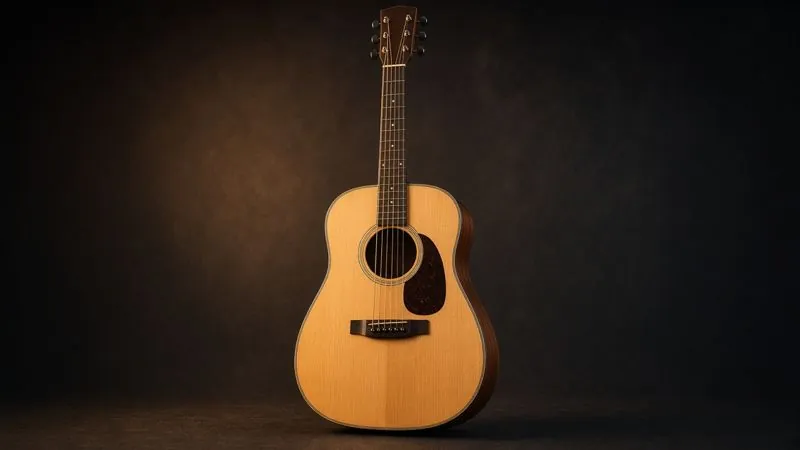
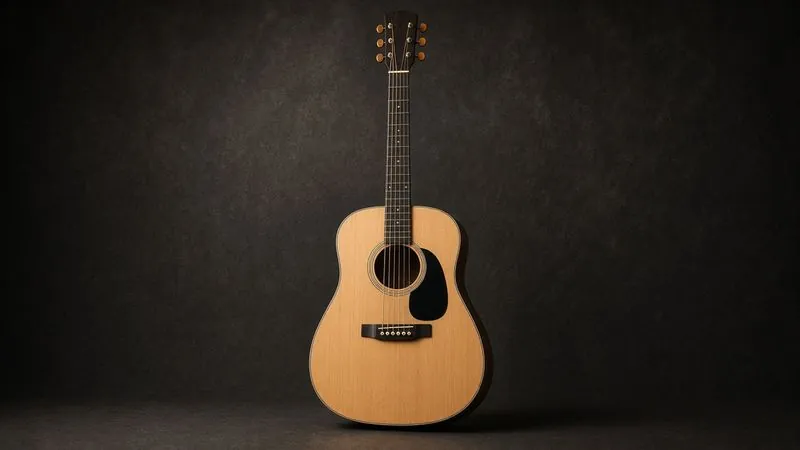
Both main picks have a solid spruce top, per their makers - unusual at this level and the main reason they get recommended so widely. Want to know why that matters? Read solid top vs laminate. For a deeper acoustic comparison, see our best beginner acoustic guitars on a budget.
ILLUSTRATION
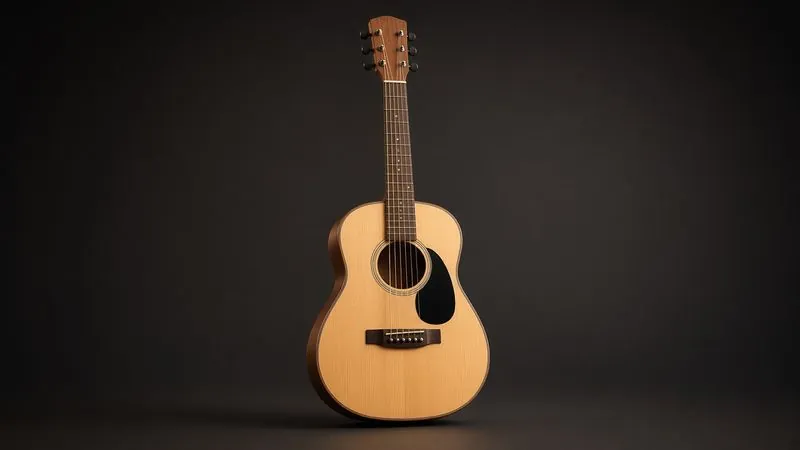
Illustration - AI-generated, not a photo of the exact product.
Starter
Yamaha FG800
Best for Beginners wanting a full-size solid-top dreadnought
Solid spruce topdreadnought-style body (per Yamaha Malaysia/series pages)
Specs: Yamaha USA official product page, checked 2026-10-18.
As an Amazon Associate, FretCompare earns from qualifying purchases. Price shown only on Amazon.
How to choose between them: both are full-size dreadnoughts with a solid spruce top. Fender lists a 25.3in scale and rolled fingerboard edges for the CD-60S; Yamaha lists the FG800 in its beginner-guitar range. Pick the one whose listing, finish or current price suits you. If you want to plug in later, the acoustic-electric versions usually list above $300, so we left them out here.
Best electric guitars under $300 (and the pack question)
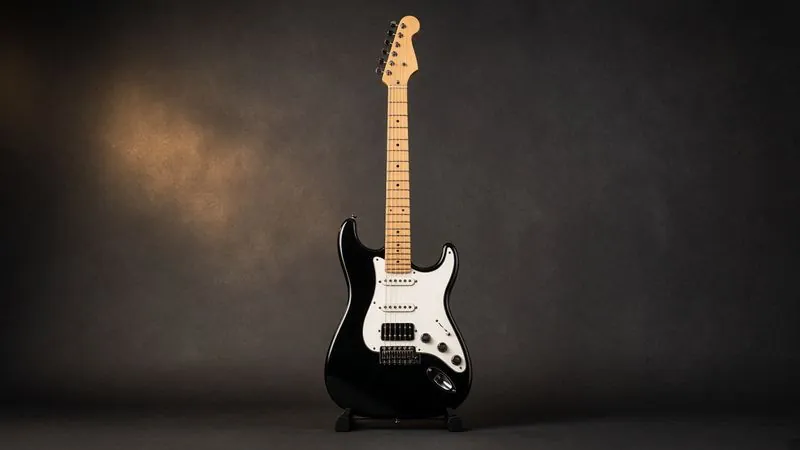
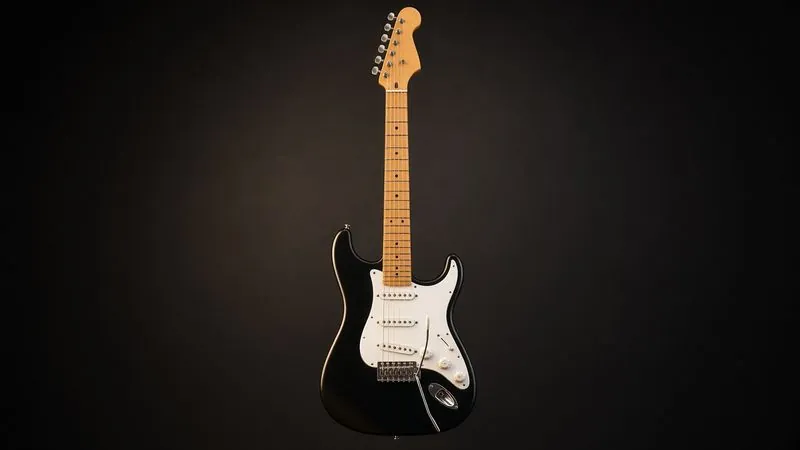
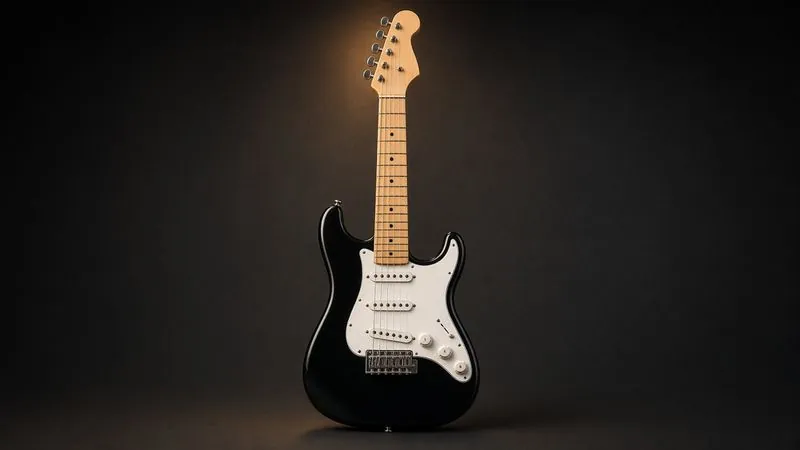
Both electrics are full-size guitars that you will not outgrow quickly. The PAC012 pairs a humbucker with single-coils (per the listing) for thicker rock sounds; the Sonic Strat is the classic three-single-coil Strat layout with a slim C neck and thin, light body (per Fender). Want more detail? See best beginner electric guitars.
ILLUSTRATION
Illustration - AI-generated, not a photo of the exact product.
Starter
Yamaha PAC012 Pacifica
Best for Beginners wanting humbucker + single-coil versatility in one guitar
As an Amazon Associate, FretCompare earns from qualifying purchases. Price shown only on Amazon.
Packs: an honest answer
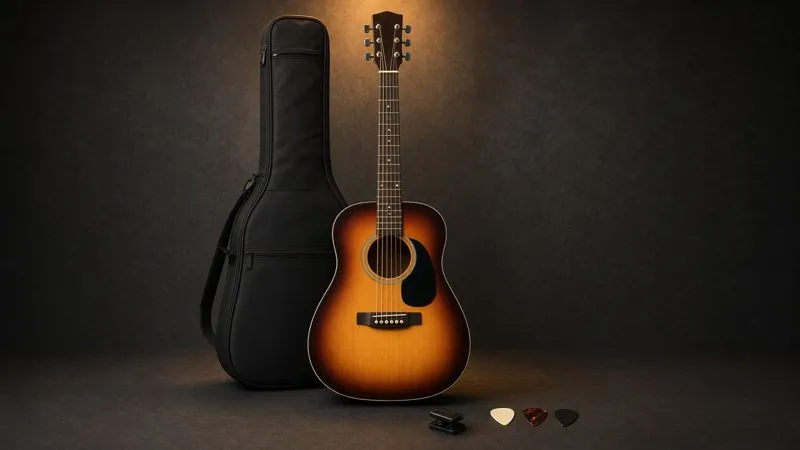
A pack bundles the guitar with a gig bag and accessories, and for electrics, an amp. The pack that fit under $300 at our check is the acoustic Yamaha GigMaker Standard (guitar with gig bag, tuner, strap and picks, per the listing). We could not verify an official electric pack from Fender/Squier or Yamaha listed under $300 on Amazon that day. The official Squier Affinity Stratocaster HSS Pack was over $300, and some cheaper "bundles" are dealer-assembled kits with unclear models, so we left them out. If you want an electric under $300, buy one of the guitars above and add a headphone amp like the Fender Mustang Micro. Expect that combination to cost more than $300 in total. Packs over budget are compared on our beginner electric packages page.
ILLUSTRATION
Illustration - AI-generated, not a photo of the exact product.
Starter
Yamaha GigMaker Standard Pack
Best for Acoustic starter bundle from one trusted brand
Yamaha acoustic (F-series) with gig bagtunerstrap and picks (per Yamaha pack listing)
Specs: Yamaha official product page, checked 2026-10-18.
As an Amazon Associate, FretCompare earns from qualifying purchases. Price shown only on Amazon.
Best small-body guitar under $300
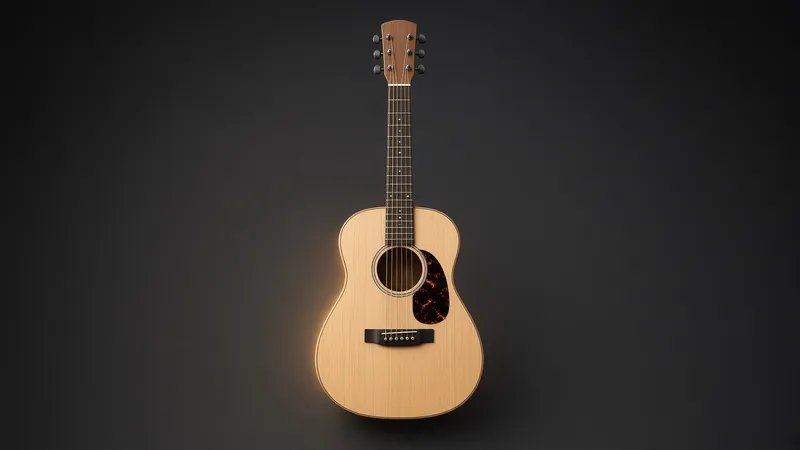
The 3/4-size Yamaha JR2 is a compact version of Yamaha's FG series, with a 540mm scale and a gig bag, per Yamaha. It suits children and also works as a travel guitar for adults - see best travel guitars. Want it cheaper? The JR1 in the under-$200 section has the same scale and nut width.
ILLUSTRATION
Illustration - AI-generated, not a photo of the exact product.
Starter
Yamaha JR2 3/4-Size Acoustic
Best for Kids and travel - smaller body and shorter reach
3/4-scale mini folk guitar modelled after the FG series (per Yamaha)
Specs: Yamaha USA official product page, checked 2026-10-18.
As an Amazon Associate, FretCompare earns from qualifying purchases. Price shown only on Amazon.
Best nylon-string guitar for beginners
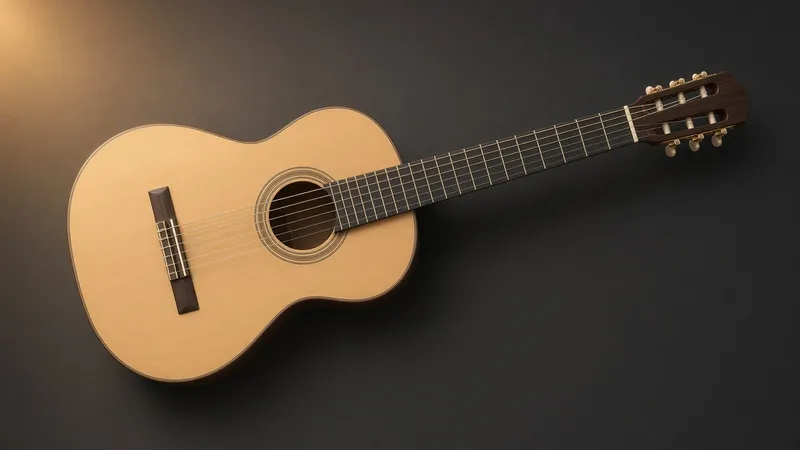
The Yamaha C40II is a full-size classical with a spruce top, a 650mm scale and a 52mm nut, per Yamaha's spec sheet. Yamaha describes it as one of its most affordable full-size classical models. Choose it for classical or fingerstyle music, or if tender fingertips are your main worry. It also fits the under-$200 limit, so its card is in the next section. Remember that it takes nylon strings only - see how to restring a classical guitar when the time comes.
Best beginner guitar under $200
All three were listed under $200 on Amazon when we checked on Oct 20, 2026 - but only just, so check today's price. Our honest view: under $200, you are choosing by player and style more than by quality tier. For a full-size steel-string acoustic, the extra for the FG800 or CD-60S above is worth it if you can stretch.
Adults and teens on a strict $200 budget: the Yamaha C40II (nylon, full size).
Kids or small players, acoustic: the Yamaha JR1 (3/4-size steel-string, gig bag included per Yamaha).
Kids or small players, electric: the Squier Mini Stratocaster. Add an amp to the budget.
ILLUSTRATION
Illustration - AI-generated, not a photo of the exact product.
Starter
Yamaha C40II Classical
Best for Nylon strings: softest on fingertips; classical, folk and fingerstyle starters
Fingertip soreness is normal in the first weeks; sharp pain, numbness or tingling is not. Practise in short blocks and stop if that happens.
Truss rods can snap if forced. Only adjust one with the correct tool, in small increments, and stop if it resists - or leave it to a tech.
Strings are sharp at the ends and under tension. Wear eye protection when cutting or changing them, and keep cut ends away from small children.
Keep headphone and amp volume moderate, and take listening breaks.
FAQ
What is the best beginner guitar under $300?
For most beginners who want an acoustic, the Yamaha FG800. It has a solid spruce top, per Yamaha, and full-size dreadnought body. For rock, the Yamaha PAC012 or Squier Sonic Stratocaster - plus an amp.
Is $300 enough for a first guitar?
Yes, for an acoustic. Every main pick here was listed under $300 on Amazon when checked. For an electric, $300 covers the guitar, but adding an amp or headphone amp can take the total over.
Can I get a decent guitar under $200?
Yes, if it fits the player: a nylon-string Yamaha C40II, a 3/4-size Yamaha JR1 or a Squier Mini Strat. For a full-size steel-string acoustic, stretching toward the FG800 or CD-60S, or buying used, gives better odds.
Should a beginner buy acoustic or electric?
Buy the type that matches the music you want to play. Electrics are usually easier to press but need an amp. Acoustics are self-contained.
Do cheap guitars need a setup?
Often, yes. Factory setups vary even on good models. Check yours with the steps above, and consider a professional setup if the action is high.
Are these prices fixed?
No. We do not show prices because Amazon prices change often. Each button opens the exact Amazon listing with the current price.
Sources checked
Yamaha USA: FG800 product page (checked Oct 2026): shop.usa.yamaha.com/en/p/instruments/guitars-basses-amps/guitar-type/b
Fender: CD-60S Dreadnought product page (checked Oct 2026): www.fender.com/products/cd-60s-dreadnought
Sweetwater: Yamaha PAC012 spec listing (checked Oct 2026): www.sweetwater.com/store/detail/PAC012BK--yamaha-pac012-pacifica-black
Fender: Squier Sonic Stratocaster product page (checked Oct 2026): www.fender.com/products/squier-sonic-stratocaster
Yamaha USA: FG series (GigMaker pack guitar) (checked Oct 2026): usa.yamaha.com/products/musical_instruments/guitars_basses/ac_guitars/
Yamaha USA: JR1 and JR2 spec sheet (checked Oct 20 2026): usa.yamaha.com/products/musical_instruments/guitars_basses/ac_guitars/
Yamaha USA: C40II spec sheet (checked Oct 20 2026): usa.yamaha.com/products/musical_instruments/guitars_basses/cl_guitars/
Fender: Squier Mini Stratocaster product page (checked Oct 2026): www.fender.com/products/mini-stratocaster
Not hands-on testing: FretCompare summarises official instructions and published facts. Steps and terms change, so follow the official page if it differs.
How this page was made
Picks are editorial, from maker specs and published facts - not hands-on testing. Each product button goes to the exact Amazon listing for that model. How we rate.
Update log: 2026-10-20 - every product button re-checked against its exact Amazon listing (ASIN, title and seller).
Free printable: Beginner Gear Checklist - no email needed: Open the checklist.
Free 7-Day First Chords course - Confirm your email first (Kit sends a confirmation link). Day 1 arrives the next morning (about 9 AM Central), then one short email a day until Day 7: setup, first chords, strumming, a first song. Unsubscribe any time.
 ILLUSTRATION