How to Install Locking Tuners (and String Them Afterwards)
Locking tuners are a common upgrade, and on many guitars they are a direct swap with a screwdriver and a 10mm wrench. The job only gets risky when the new tuners do not match your headstock's holes - which you can check before you touch a drill.
Editorial guide built from manufacturer instructions and specs - not hands-on testing. Product cards link to Amazon; we never show Amazon prices here.
Quick answer
Before buying, match three things: post-hole size, screw or alignment-pin position, and headstock layout (6-in-line or 3+3). To install: remove strings, undo the bushings and rear screws, lift the old tuners out, test-fit the new ones, mark and drill any pilot holes with a tape depth-stop, fit the tuners, snug screws, then tighten the bushings evenly with a 10mm wrench - snug, never forced. Restring with the string pulled taut, locked, and only a small wrap. If holes need reaming or new holes need drilling on a guitar you care about, use a tech.
Take the lesson finder quiz
Prices last checked: Oct 2026 where a verified price is shown on a card - confirm at checkout. Editorial from published facts, not hands-on testing: How we rate.
This page vs our restringing guide
This page covers fitting locking tuners. If yours are already fitted and you just need to string them, the short version is near the end of this page and the full electric method is in how to restring an electric guitar. Wondering whether locking tuners will even help your tuning problem? Read why a guitar won't stay in tune first - the nut and string stretch cause more drift than tuners do.
Step 0: check fit before you buy
- Post-hole diameter: StewMac notes most enclosed-gear tuners need a 3/8in hole, while vintage Kluson-style tuners use 11/32in. Some sets need larger: Grover lists its Roto-Grip 502 with a 25/64in (10mm) post hole, while StewMac lists the same set's peghole as 10mm (13/32in) - either way, bigger than a standard 3/8in hole. StewMac also lists 5/64in pilot holes for the mounting screws (wax the screw threads). Measure your headstock, compare it with the maker's spec, and treat enlarging holes as a tech job (a reamer in the wrong hands can split a headstock or chip the finish).
- Mounting: some tuners use a small rear screw, others a hidden alignment pin (Fender locking tuners are among the pin-located types StewMac's drill jig is made for). A different screw or pin position means new holes.
- Layout: 6-in-line (Strat/Tele style) and 3+3 (Les Paul style) sets are not interchangeable.
- Staggered posts: some locking sets use different post heights; follow the maker's order if so.
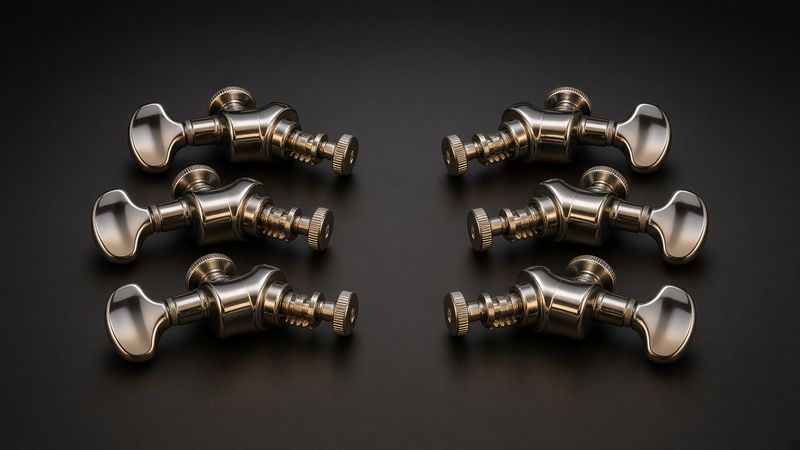
Illustration - AI-generated, not a photo of the exact product.
Step-upFender Locking Tuners (Strat/Tele style)
Confident DIY on compatible Fenders; verify fit before ordering
No list price listed here - we only publish prices we verified on a manufacturer/retailer page. Check the maker and Amazon for current pricing.
Locking replacement tuners for many Fender 6-in-line headstocks - check post/bushing fit for your model year
Maker/retailer source for the price & specs above (citation, not a buy link): Fender
See price on Amazon
As an Amazon Associate, FretCompare earns from qualifying purchases. Price shown only on Amazon.
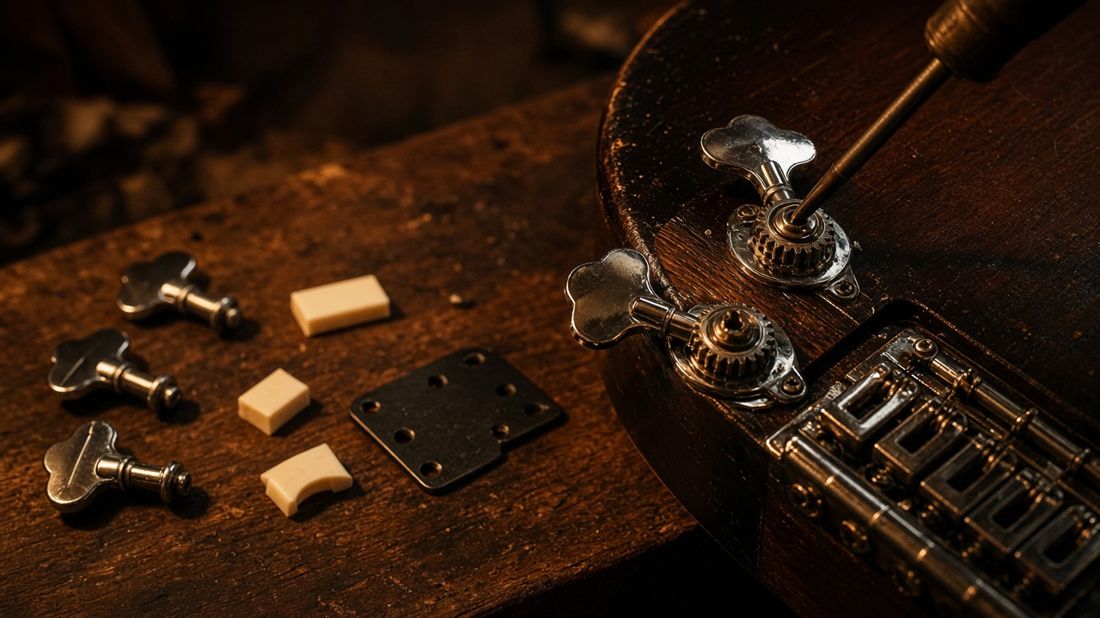
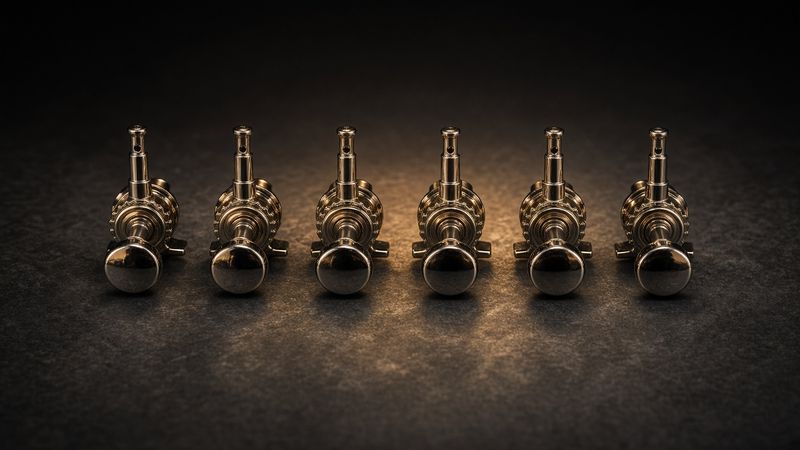
Illustration - AI-generated, not a photo of the exact product.
SeriousGrover Roto-Grip Locking Rotomatics (502, 3+3)
Tech-or-confident job: faster string changes and tuning stability on 3+3 headstocks
No list price listed here - we only publish prices we verified on a manufacturer/retailer page. Check the maker and Amazon for current pricing.
Locking 18:1 tuners3+3 headstocks25/64in post holes (per Grover listings)
Maker/retailer source for the price & specs above (citation, not a buy link): Grover
See price on Amazon
As an Amazon Associate, FretCompare earns from qualifying purchases. Price shown only on Amazon.
Prices last checked: Oct 2026 where a verified price is shown on a card - confirm at checkout. Editorial from published facts, not hands-on testing: How we rate.
What you need
- The correct-size screwdriver (a sloppy fit strips tiny tuner screws)
- A 10mm wrench or socket for the hex bushings - the size on nearly all modern tuners - never pliers
- Cutters and a tuner
- For new holes only: a drill, the bit size the maker specifies, masking tape as a depth stop, and a centre punch or awl
- A towel or neck support, and a soft cloth to protect the headstock face
Step-by-step installation
- Remove the strings (slacken first, then cut).
- Undo the bushings on the headstock face with the 10mm wrench, and remove the washers.
- Remove the rear screws and lift the old tuners out. Bag the old hardware - you may want it back.
- Test-fit each new tuner. It should drop in and sit flat without forcing. If it will not, stop: that is a hole-size problem (see Step 0).
- Align the tuners with a straight edge, square to the headstock edge, and snug the bushings finger-tight to hold them.
- Existing holes line up? Fit the screws by hand and skip to step 8.
- New holes needed? Mark the positions, remove the tuners, wrap tape around the bit at the screw or pin depth (StewMac and Sweetwater both use this depth-stop trick so you never drill through the headstock face), and drill straight and slowly, clearing chips. Plug unused old screw holes with a glued wooden toothpick or dowel, trimmed flush.
- Fit and tighten: drive the rear screws until snug, then tighten the bushings evenly, a little at a time across all six - snug, not cranked. Over-tightening can crack the finish around the bushing.
- Check that every tuner turns smoothly and sits square from the back.
Stringing locking tuners (the short version)
- Turn the post so its hole lines up with the string path.
- Feed the string through, pull it taut by hand, and lock it with the thumbwheel or locking mechanism.
- Cut the excess, then tune up. You only need a small wrap - Ernie Ball's advice is still at least three-quarters of a turn around the post so the string leaves cleanly.
- Stretch and retune as usual.
Full details, including tremolo bridges: how to restring an electric guitar.
When to call a tech
- Holes need reaming, or new screw or pin holes on a valuable, vintage or nitro-finished guitar.
- The headstock face is cracked around a bushing, or a press-fit vintage bushing is loose.
- Old screw holes would show and you care about the look.
FAQ
Do locking tuners need drilling?
Not always. If the post-hole size and the screw or alignment-pin position match your old tuners, they swap with a screwdriver and a 10mm wrench. Different positions mean new pilot holes.
What size wrench do guitar tuner bushings use?
Nearly all modern tuners use a 10mm hex bushing. Use a proper wrench or socket, not pliers, and tighten evenly without forcing.
How many wraps do locking tuners need?
Very few. Pull the string taut, lock it and tune up; Ernie Ball suggests at least three-quarters of a turn around the post.
Will locking tuners stop my guitar going out of tune?
They remove slip at the post and speed up string changes. They do not fix a binding nut, tremolo return or string stretch.
Fix-it guides: Restring a classical - Capo out of tune - Install locking tuners - Loose tuning pegs - Stuck bridge pins - Do you need a string winder? - Best fretboard oil - Hum stops when you touch strings - Strings too hard to press - Install strap locks
Parts help: Replacement parts - Won't stay in tune - Restring an electric
Sources checked Oct 19, 2026: StewMac assembly guide (tuner installation) and tuner pin drill jig notes, Sweetwater on upgrading tuners, Guyker and Guitar Monkey locking-tuner installation guides, Ernie Ball on wraps.
 ILLUSTRATION