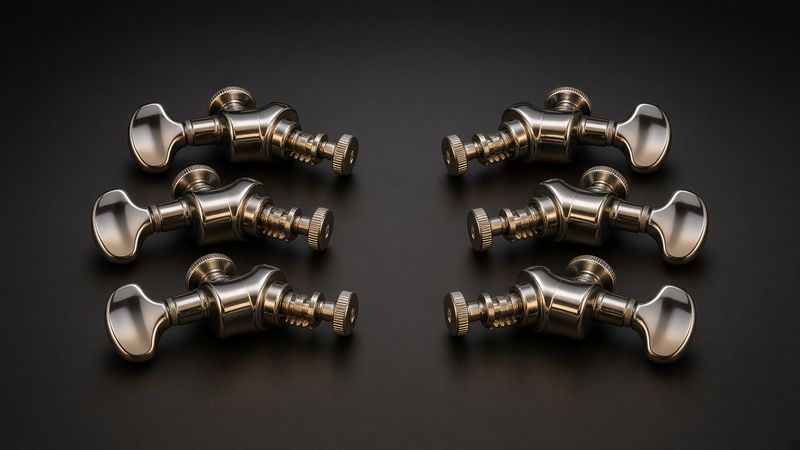
Loose, Wobbly or Stiff Tuning Pegs: Find the Part, Then Fix It
A tuning machine has three fixings that can loosen - the hex nut (bushing) on the front of the headstock, a small screw on the back, and the screw in the end of the button. Which one is loose tells you the fix; most take a minute and a 10mm wrench or a small screwdriver.
Editorial guide built from manufacturer instructions and specs - not hands-on testing. Product cards link to Amazon; we never show Amazon prices here.
Quick answer
Wobbles at the front or rattles when you tap the headstock: snug the hex bushing with a 10mm wrench (strings can stay on). Housing twists at the back: snug the small rear screw. Button wobbles or feels too stiff or too loose to turn: adjust the screw in the end of the button. Turns but the string will not hold, or it skips: the gears are worn - replace the tuner. Snug, never forced.
Take the lesson finder quiz
Prices last checked: Oct 2026 where a verified price is shown on a card - confirm at checkout. Editorial from published facts, not hands-on testing: How we rate.
Find which part is loose
| Symptom | Likely part | Fix |
|---|
| Tuner wobbles on the headstock face; metallic buzz when you tap the headstock | Hex nut/bushing on the front | Snug with a 10mm wrench |
| Tuner housing rotates at the back | Small mounting screw on the back | Snug with a fine Phillips; fix a stripped hole |
| Button wobbly, or the tuner too stiff or too easy to turn | Screw in the end of the button | Quarter-turn adjustments |
| Turns freely, string will not come up to pitch, or skips | Worn or stripped gears | Replace the tuner |
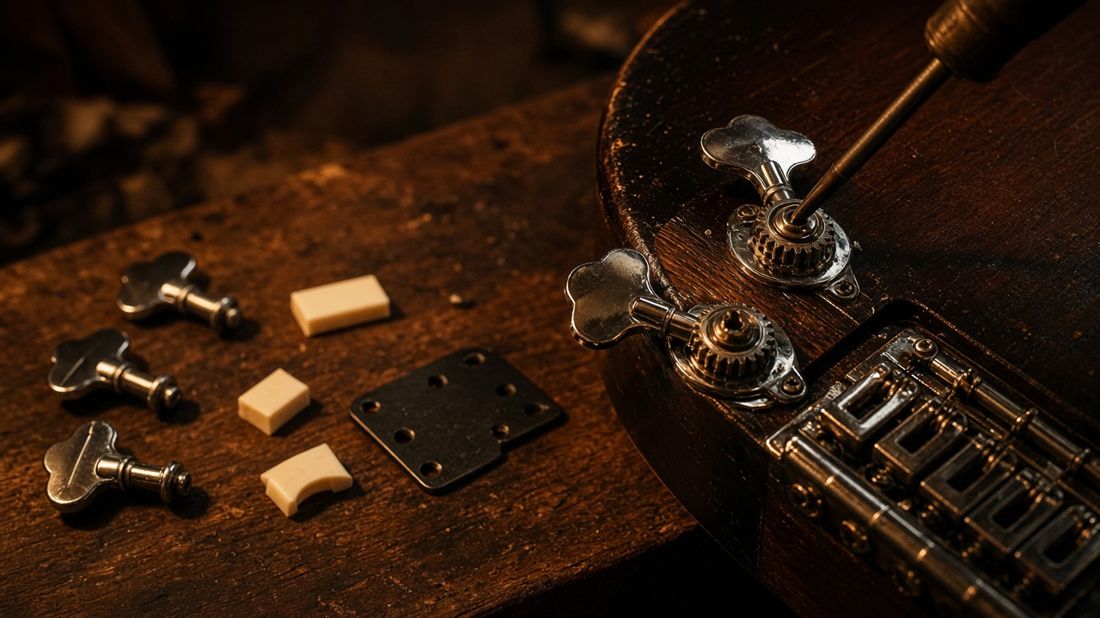
| Open-gear (vintage or classical) gear shifts | Screw in the gear centre or plate screws | Snug the screw |
Fix 1: the front bushing (most common)
Most modern tuners are held to the headstock by a 10mm hex nut over a washer. Wood shrinks slightly in dry air, so these loosen and the washers rattle - Acoustic Guitar's repair column lists it as a classic source of mystery buzz. Lakewood and Acoustic Guitar both note you can tighten them with the strings on.
- Use a 10mm open-end wrench or socket, not pliers (pliers slip and dent the headstock).
- Turn clockwise until snug - stop as soon as the tuner stops moving.
- Check all of them while you are there.
Do not over-tighten: forcing the bushing can crush the wood or crack the finish around it. Vintage Kluson-style tuners often use press-in bushings with no nut; a loose press-in bushing is a quick job for a tech.
Fix 2: the rear screw
The small screw on the back stops the tuner rotating; the front bushing does the clamping (Guitar Repair Bench's explanation). Snug it gently with a correctly sized Phillips screwdriver. If it just spins, the hole is stripped: remove the screw, push in a wooden toothpick dipped in wood glue, let it dry, trim flush and refit - the same fix we describe for loose strap buttons.
Fix 3: button feel (too loose, too stiff)
On most enclosed tuners, the screw in the end of the button sets how easily it turns. Lakewood's guidance: too tight and the tuner is hard to turn; too loose and the button can vibrate. Adjust a quarter-turn at a time until the button turns smoothly with slight resistance. If a tuner is stiff even with that screw backed off, it may be damaged inside - many sealed tuners are not meant to be opened, so replacement is the honest fix.
Wood or celluloid buttons on some acoustics can shrink or crack in dry air (Guitar Repair Bench); replacement buttons exist for many models.
Fix 4: slipping or skipping = worn gears
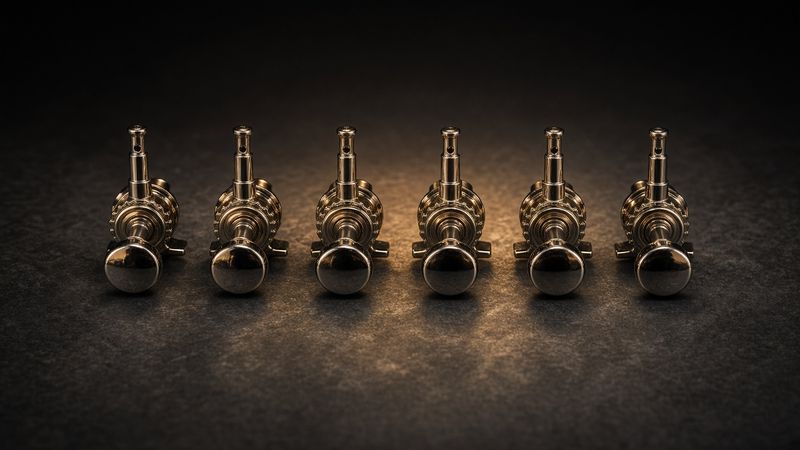
If the post turns but the string will not hold pitch, or you feel the gear skip under tension, the teeth are worn. Tightening anything will not help - replace the tuner. Before buying, match post-hole size, mounting screw or pin position and layout (see how to install locking tuners). A matching replacement from the original maker is the simplest swap; locking sets like these are an upgrade if they fit your headstock:
Illustration - AI-generated, not a photo of the exact product.
Step-upFender Locking Tuners (Strat/Tele style)
Confident DIY on compatible Fenders; verify fit before ordering
No list price listed here - we only publish prices we verified on a manufacturer/retailer page. Check the maker and Amazon for current pricing.
Locking replacement tuners for many Fender 6-in-line headstocks - check post/bushing fit for your model year
Maker/retailer source for the price & specs above (citation, not a buy link): Fender
See price on Amazon
As an Amazon Associate, FretCompare earns from qualifying purchases. Price shown only on Amazon.
Illustration - AI-generated, not a photo of the exact product.
SeriousGrover Roto-Grip Locking Rotomatics (502, 3+3)
Tech-or-confident job: faster string changes and tuning stability on 3+3 headstocks
No list price listed here - we only publish prices we verified on a manufacturer/retailer page. Check the maker and Amazon for current pricing.
Locking 18:1 tuners3+3 headstocks25/64in post holes (per Grover listings)
Maker/retailer source for the price & specs above (citation, not a buy link): Grover
See price on Amazon
As an Amazon Associate, FretCompare earns from qualifying purchases. Price shown only on Amazon.
Prices last checked: Oct 2026 where a verified price is shown on a card - confirm at checkout. Editorial from published facts, not hands-on testing: How we rate.
Classical guitars and slotted headstocks
Classical guitars use three-on-a-plate rollers screwed to the sides of a slotted headstock. If a plate is loose, snug its small wood screws gently; a stripped hole takes the toothpick fix. If a roller wobbles in the wood itself or a plate is cracked, see a tech.
Not the tuners after all?
Tuning that drifts with solid tuners is usually string stretch, the nut or temperature - see won't stay in tune. Strings slipping on the post are covered in restring an electric and restring an acoustic.
FAQ
Why are my guitar tuning pegs loose?
Usually the 10mm hex bushing on the front of the headstock has loosened as the wood dried and shrank slightly. Snug it with a 10mm wrench; you do not need to remove the strings.
Why are my tuning pegs so hard to turn?
The screw in the end of the button may be too tight - back it off a quarter-turn. If it is still stiff, the gear may be damaged, and sealed tuners are normally replaced rather than opened.
Can I tighten tuning pegs with strings on?
Yes, for the front bushing and the rear screw. Slacken the string first if you are removing the tuner.
What does it mean when a tuning peg slips?
If the post turns but the string will not hold, or the gear skips, the gears are worn. Replace the tuner.
Fix-it guides: Restring a classical - Capo out of tune - Install locking tuners - Loose tuning pegs - Stuck bridge pins - Do you need a string winder? - Best fretboard oil - Hum stops when you touch strings - Strings too hard to press - Install strap locks
Related: Replacement parts - Won't stay in tune - Tools
Sources checked Oct 19, 2026: Lakewood Guitars machine-head care FAQ, Acoustic Guitar on rattles and buzzes, Guitar Repair Bench tuner repair guide, wikiHow and Guyker loose-peg guides. Safety: snug, never forced; no pliers on hardware.
 ILLUSTRATION