How to Restring an Acoustic Guitar (Bridge Pins Included)
Changing acoustic strings takes 15-30 minutes the first time and under 15 once you have done it twice. The two places beginners get stuck are the bridge pins and how much string to leave at the tuner - both are covered below with the exact checks.
Editorial guide built from manufacturer instructions and specs - not hands-on testing. Product cards link to Amazon; we never show Amazon prices here.
Quick answer
Slacken the strings, pull the pins (pin puller, or push them up from inside the soundhole), seat each new ball end under the bridge plate with the pin's groove facing the neck, leave roughly 2.5in (6cm) of extra string on the low E rising to about 4in (10cm) on the high E, wind toward the centre of the headstock with the wraps going down the post, then tune up to pitch, stretch and retune 2-3 times. A string winder saves time; it is optional.
Take the lesson finder quiz
Prices last checked: Oct 2026 where a verified price is shown on a card - confirm at checkout. Editorial from published facts, not hands-on testing: How we rate.
What you need (and what you can skip)
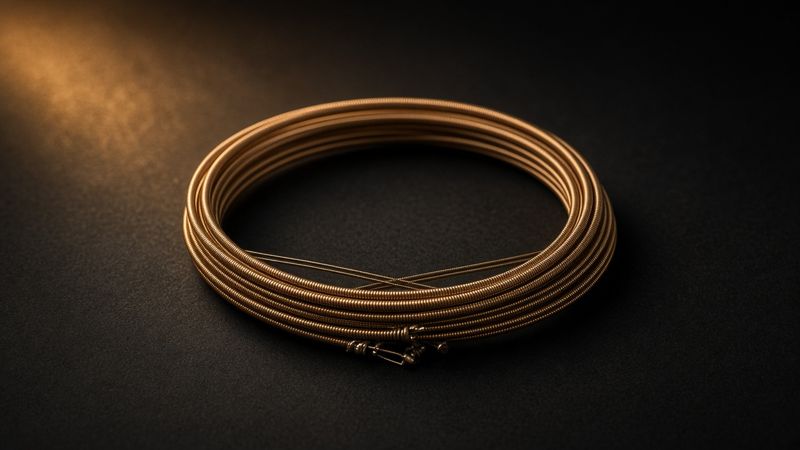
- A new set in the gauge you already play - the gauge printed on the old packet, or use our string gauge finder. Use acoustic strings (phosphor bronze or 80/20 bronze); electric nickel sets are made for magnetic pickups and sound thin and quiet on an acoustic.
- Cutters - side cutters or the cutter built into a 3-in-1 winder.
- A tuner - a clip-on or our free browser tuner.
- Optional: a winder with a pin-puller notch, a soft cloth, and a towel or neck rest so the guitar lies flat.
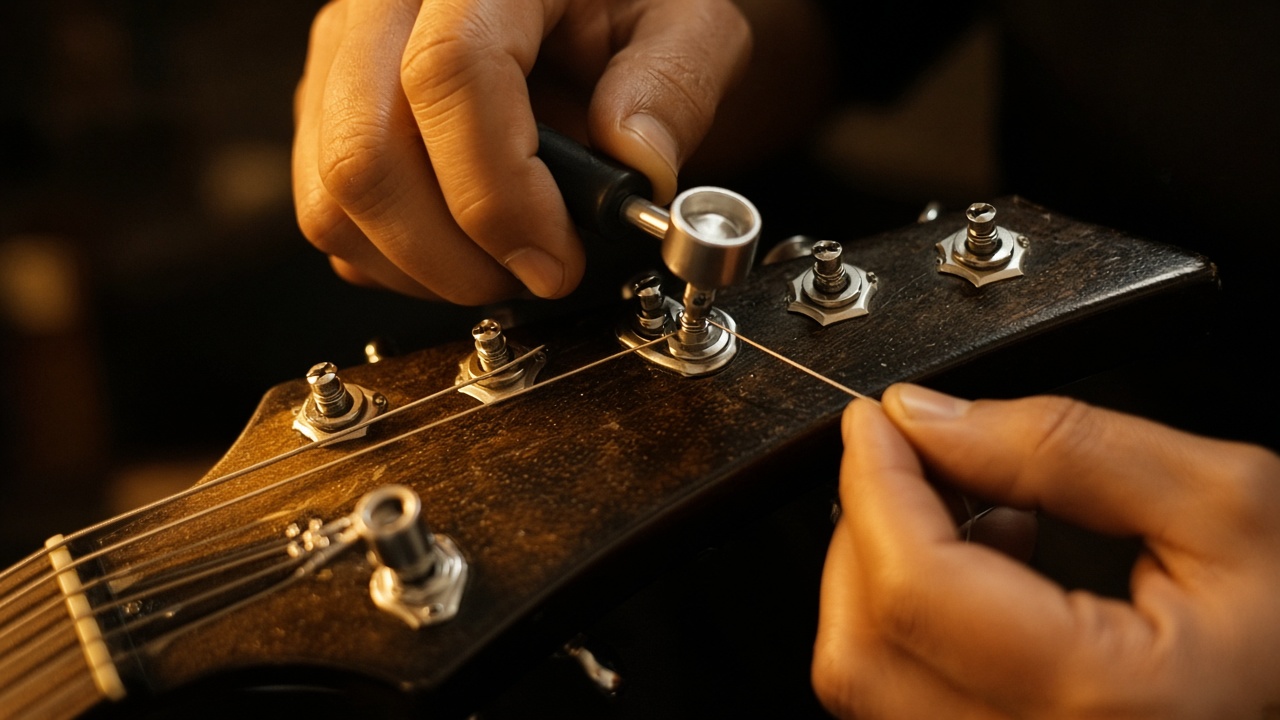
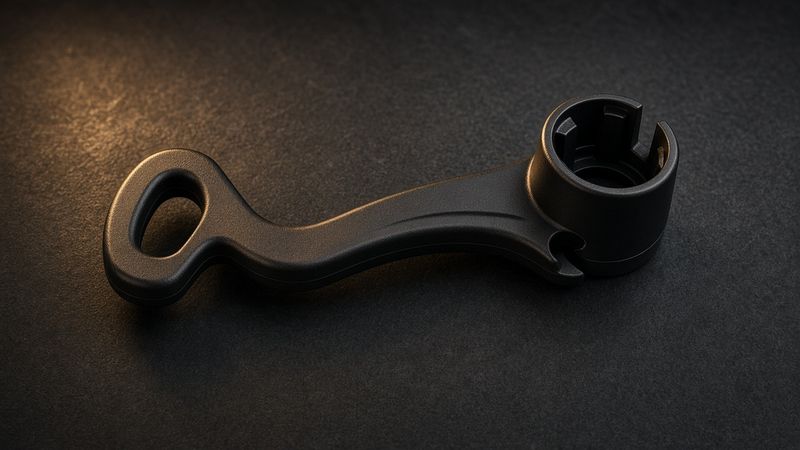
Can you do it without tools? Yes: fingers turn the tuners, and with the strings slack you can reach inside the soundhole and push each pin up from underneath (StewMac's own suggestion when you have no puller). If a pin is stuck, push the string a little further into the bridge first so the ball end lets go of it. What you should never do is lever pins out with a screwdriver or pliers against the bridge - that is how bridges get dented and pins split. The Pro-Winder below is the one tool that does all three jobs (wind, cut, pull pins) for a small, maker-verified price.
Illustration - AI-generated, not a photo of the exact product.
StarterD'Addario Pro-Winder (winder + cutter + pin puller)
The one restringing tool every case should contain
$12.99
Manufacturer/retailer list price (not an Amazon price): D'Addario product page - checked 2026-10-18. Confirm before buying.
String winderhardened-steel string cutter and acoustic bridge-pin puller in one tool (per D'Addario)
Maker/retailer source for the price & specs above (citation, not a buy link): D'Addario
See price on Amazon
As an Amazon Associate, FretCompare earns from qualifying purchases. Price shown only on Amazon.
Prices last checked: Oct 2026 where a verified price is shown on a card - confirm at checkout. Editorial from published facts, not hands-on testing: How we rate.
Step 1: loosen and remove the old strings
This guide is for steel-string acoustics with bridge pins; nylon-string classical guitars tie on at the bridge and need a different method (see how to restring a classical guitar). Slacken each string until it is floppy, then cut it around the 12th fret (safe once slack - D'Addario's method) or unwind it fully. Never cut a string at full tension: it whips and the cut ends are sharp. Uncoil the end from the tuner post, then pull the bridge pin: hook the pin-puller notch under the pin head and lift straight up. If it is tight, push the string a centimetre into the bridge first to free the ball end, then lift. Keep the pins in order - holes can differ slightly, so each pin should go back where it came from.
One at a time or all at once? One at a time keeps the pins in order and is easiest for a first change. Taking all six off for a few minutes is fine on a healthy acoustic, and it is the only way to wipe the fretboard properly - see how to clean a fretboard.
Step 2: seat the ball end correctly (the step most people get wrong)
- Put about 2-3cm of the ball end into the bridge hole.
- Push the pin in with its groove facing the string (toward the neck). The groove gives the string a channel; a pin turned sideways pinches it. Unslotted pins (used with slotted bridges) can go in any way round.
- Hold the pin down with one thumb and pull the string gently upward toward the headstock until you feel the ball end catch against the bridge plate under the top.
- Press the pin home. If the pin rises as you tune up, the ball end is resting on the pin tip instead of the plate - slacken, push the string further in, and repeat.
A tip that saves frustration: bend the string about 45 degrees just above the ball end before you insert it. It steers the ball toward the plate instead of up beside the pin. Not sure it is seated? Reach inside the soundhole and feel for the ball end against the underside of the top. Never hammer a pin in.
Step 3: slack, wraps and winding direction at the tuner
Pull the string through its post and leave extra length past the hole: StewMac's starting point is about 2.5in (6cm) on the low E, giving roughly 3 wraps, rising to about 4in (10cm) on the high E, giving roughly 5 wraps - wound strings hold with fewer wraps, plain strings need a few more. Quick gauges: the distance to the next tuner post, or D'Addario's trick of using a palm-width of slack lifted at the 12th fret. Too many wraps add string that keeps stretching; too few let it slip.
To lock it: make the first wrap go over the loose end poking out of the post, then let every following wrap go under it. The end gets clamped and will not slip.
Direction: on a standard 3+3 acoustic headstock, wind so each string leaves the post on the inside (toward the centre of the headstock) and the wraps stack downward on the post. That gives a straight path through the nut and a good break angle. Bring each string roughly to pitch as you go so the neck loads evenly.
Step 4: stretch, tune, and only then trim
New strings stretch, which is why a freshly strung guitar goes flat for a day. Always tune up to the note; if you overshoot, drop below it and come back up so no slack hides at the post or nut. With all six near pitch, stretch each string gently along its length - pull it a little away from the fretboard (do not yank it at the bridge) - retune, and repeat 2-3 times until it holds. Then trim the ends about 5mm (1/4in) past the post, pointing the cut end away from your face. Slight drift the next day is normal stretch-in; persistent drift is covered in why your guitar won't stay in tune.
Do not tune above pitch to speed up stretching. It stresses the strings and the bridge and is the most common reason a brand-new high E snaps (see guitar string keeps breaking).
Small details the quick guides skip
- Which string goes where: the packet is labelled, and many brands colour-code the ball ends (D'Addario publishes its colour chart). Work from the thickest (low E) to the thinnest.
- Clean while the strings are off: wipe under where the strings sat, the headstock and the bridge area; condition an unfinished fretboard if it looks dry (see how to clean a fretboard).
- Old string remnants wrapped on the posts are sharp - unwind or pull them off with pliers and watch your fingers.
- Reading the tuner: a fresh pluck reads slightly sharp for a split second; let the needle settle for about a second before adjusting (StewMac notes this).
- Old strings: D'Addario runs a string-recycling programme (PlayBack); otherwise coil them and bin them safely.
Which strings to put on
Stay with what the guitar was set up for unless you have a reason to change: a much lighter or heavier set can change action and neck relief. Light (12-53) is the most common acoustic gauge. Three catalog sets that directly answer 'what should I restring with': an uncoated phosphor-bronze standard, a coated set for players who change strings rarely, and Martin's own phosphor-bronze light set:
Illustration - AI-generated, not a photo of the exact product.
StarterD'Addario EJ16 Phosphor Bronze Light .012-.053 (acoustic)
The standard uncoated acoustic set most guitars ship with
No list price listed here - we only publish prices we verified on a manufacturer/retailer page. Check the maker and Amazon for current pricing.
Phosphor bronze acoustic stringslight .012-.053uncoated
Maker/retailer source for the price & specs above (citation, not a buy link): D'Addario
See price on Amazon
As an Amazon Associate, FretCompare earns from qualifying purchases. Price shown only on Amazon.
Illustration - AI-generated, not a photo of the exact product.
Our pickElixir Acoustic Phosphor Bronze NANOWEB Light .012-.053 (16052)
Our pick for most acoustic beginners: warmth plus sparkle, and months between changes
No list price listed here - we only publish prices we verified on a manufacturer/retailer page. Check the maker and Amazon for current pricing.
Phosphor bronze wrapNANOWEB coatingrich and full tonesmooth feel (per Elixir)
Maker/retailer source for the price & specs above (citation, not a buy link): Elixir
See price on Amazon
As an Amazon Associate, FretCompare earns from qualifying purchases. Price shown only on Amazon.
Illustration - AI-generated, not a photo of the exact product.
StarterMartin MA540 Authentic Acoustic SP Phosphor Bronze Light .012-.054
Martin's own factory string - the canonical dreadnought set
No list price listed here - we only publish prices we verified on a manufacturer/retailer page. Check the maker and Amazon for current pricing.
92/8 phosphor bronzetin-plated steel core (per Martin)light .012-.054uncoated
Maker/retailer source for the price & specs above (citation, not a buy link): Martin
See price on Amazon
As an Amazon Associate, FretCompare earns from qualifying purchases. Price shown only on Amazon.
Prices last checked: Oct 2026 where a verified price is shown on a card - confirm at checkout. Editorial from published facts, not hands-on testing: How we rate.
Common mistakes (and quick fixes)
- Pin pops up while tuning - ball end not on the bridge plate; redo Step 2.
- String slips at the post - not enough wraps on a plain string, or no kink; add wraps.
- Buzz after restringing - a different gauge than before, or a string sitting outside its nut slot; check the slot first, then fret buzz fix.
- Pin split or will not seat - replace the pin; never hammer it.
- When to see a tech: cracks around the pin holes, a bridge lifting at its back edge (paper slides under it), or strings sitting much higher after a gauge change.
How often to do all this: how often to change guitar strings.
Sources checked Oct 19, 2026: D'Addario and StewMac acoustic restringing guides, D'Addario PlayBack recycling, Guitar World string-change guide.
FAQ
How do you put bridge pins back in on an acoustic guitar?
Feed the ball end a few centimetres into the hole, push the pin in with its groove facing the soundhole, then pull the string up gently while holding the pin until the ball end catches on the bridge plate under the top. Press the pin home. If it rises as you tune, the ball end is on the pin tip; push the string in further and redo it.
How much slack should I leave when restringing an acoustic?
StewMac's starting point is about 2.5in (6cm) of extra string on the low E for roughly 3 wraps, up to about 4in (10cm) on the high E for roughly 5 wraps. Wound strings need fewer wraps than plain ones.
Can I restring an acoustic guitar without a string winder?
Yes. Turn the tuners by hand and, with the strings slack, push the pins up from inside the soundhole. A winder only saves time. Do not lever pins out with a screwdriver or pliers.
Should I remove all the strings at once?
Either works on a healthy acoustic for the few minutes it takes. One at a time is easiest for beginners; all at once lets you clean the fretboard.
Why do my new acoustic strings keep going out of tune?
They are stretching. Gently stretch each string and retune 3-4 times; expect slight drift for about a day. If it continues for days, work through the won't-stay-in-tune checks.
Strings & care guides: Restring an acoustic - Restring an electric - Clean a fretboard - Strings rusting - String keeps breaking - Dull or dead tone - How to store a guitar - Strings guide - Tools & care kit
 ILLUSTRATION