How to Install Strap Locks (Schaller and Dunlop, Electric and Acoustic)
Strap locks replace your guitar's strap buttons with buttons that latch into a matching lock on the strap, so the guitar cannot slip off. On most electrics it is a screwdriver job. Acoustics need more thought, because the tail strap button is often the output jack.
Editorial guide built from manufacturer instructions and specs - not hands-on testing. Product cards link to Amazon; we never show Amazon prices here.
Quick answer
Remove the old button, check the new button's screw against the hole, and fit it by hand until snug (Schaller: 3mm hex key, never a power driver). Fit the strap-side locks through the strap holes and tighten fully. Click the lock on and pull to test. On acoustics with an endpin jack, use a jack-compatible strap-lock adapter or a tech - never drill near the jack yourself.
Take the lesson finder quiz
Prices last checked: Oct 2026 where a verified price is shown on a card - confirm at checkout. Editorial from published facts, not hands-on testing: How we rate.
Before you start
- Which system? Schaller S-Locks and Dunlop Straploks are not cross-compatible; buttons and strap locks must come from the same system. Both are in our catalogue.
- Strap thickness: our catalog lists S-Locks for straps up to 6mm thick with a 10mm strap hole (per Schaller).
- Screw fit: Schaller sells S-Lock buttons in three thread lengths - S (18mm), M (22mm, standard) and L (27mm) - and advises choosing the one that suits your existing hole.
- Protect the finish: lay the guitar on a towel, neck supported.
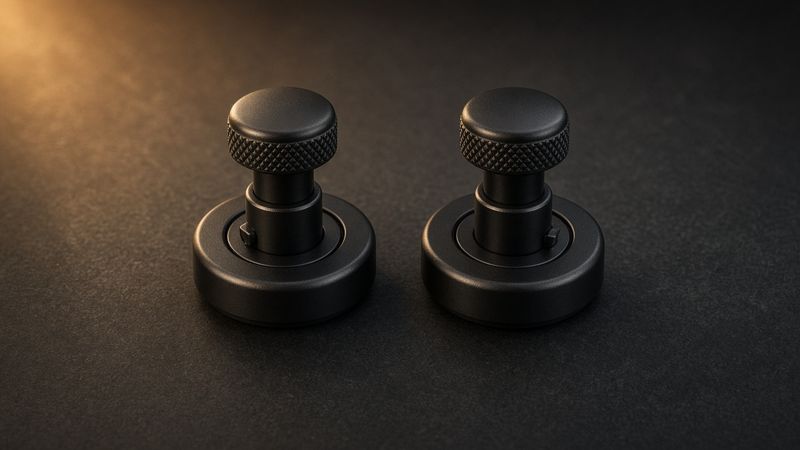
Illustration - AI-generated, not a photo of the exact product.
Step-upSchaller S-Locks Strap Lock Set (Chrome, M)
The strap-lock standard: pull-pin release, quiet, thick-strap friendly (installation required)
No list price listed here - we only publish prices we verified on a manufacturer/retailer page. Check the maker and Amazon for current pricing.
Hardened steel buttonssilent Lock-Wheelfits straps up to 6mm thick10mm strap hole (per Schaller)
Maker/retailer source for the price & specs above (citation, not a buy link): Schaller
See price on Amazon
As an Amazon Associate, FretCompare earns from qualifying purchases. Price shown only on Amazon.
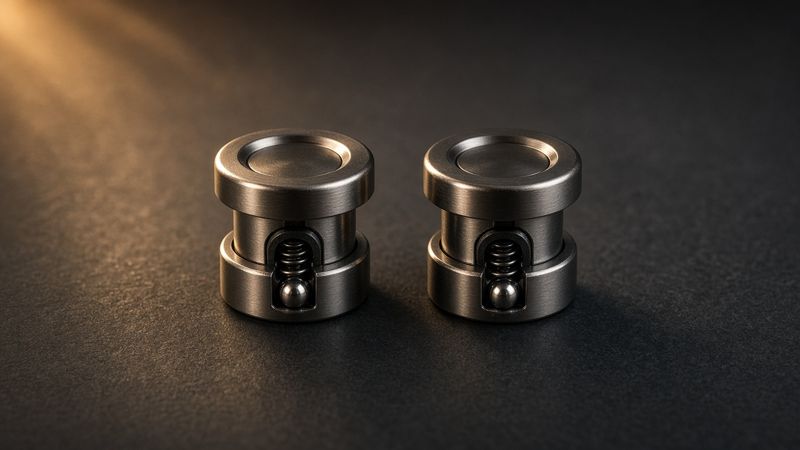
Illustration - AI-generated, not a photo of the exact product.
Step-upDunlop Dual-Design Straplok System (Nickel)
Maximum retention for heavy guitars and basses (installation required)
No list price listed here - we only publish prices we verified on a manufacturer/retailer page. Check the maker and Amazon for current pricing.
Button-release strap lockshardened steel (per Dunlop/Guitar World roundups)
Maker/retailer source for the price & specs above (citation, not a buy link): Dunlop
See price on Amazon
As an Amazon Associate, FretCompare earns from qualifying purchases. Price shown only on Amazon.
Prices last checked: Oct 2026 where a verified price is shown on a card - confirm at checkout. Editorial from published facts, not hands-on testing: How we rate.
Step-by-step: guitar side (buttons)
- Unscrew the old strap button. Keep the felt washer if the new button does not include one.
- Compare the new screw with the old one and the hole. If the hole is stripped or oversized, fix it first with the glued-toothpick method in strap keeps falling off.
- Schaller: fit the button with its felt washer and screw it in by hand with a 3mm (1/8in) hex key. Schaller says not to use an electric screwdriver - you need to feel when it is snug - and to stop and enlarge the hole gradually if it binds rather than forcing it, because the wood can split or the finish can flake.
- Dunlop Straplok (Original instructions): Dunlop's sheet calls for drilling the existing hole with a 7/64in bit to 7/8in deep, a little wax or bar soap on the screw tip, and a #2 Phillips screwdriver until snug. Follow the sheet that comes with your model, as designs vary.
- Tighten until snug against the body and stop. Over-tightening strips the hole or cracks the finish.
Step-by-step: strap side (locks)
- Schaller: push the lock through the strap hole from the inside, then screw the lock-wheel on with its flat side against the strap. Tighten it firmly with a 2mm hex key, then drive in the small set screw so the wheel cannot back off. If the strap only has a slot or a tight hole, Schaller suggests punching a clean 10mm round hole.
- Dunlop: slip the locking pin through the recessed washer, push it through the strap hole, add the flat washer and snap the retaining clip into the pin's groove.
- Clip on and pull firmly to check it is locked before trusting it.
Acoustic guitars: the endpin-jack problem
- On many acoustic-electrics the tail strap button is also the output jack. Do not drill it out or swap in a standard strap-lock button. Use a strap-lock adapter made to fit around an endpin jack (MusicNomad's Acousti-Lok is one, made for specific models - check fit), or have a tech fit a compatible solution.
- Neck-heel button: many acoustics have only one button. Adding one at the heel means drilling into the neck heel - a tech job, because position and depth matter.
- Tie your strap to the headstock? Strap locks cannot be used there.
Keep them safe: maintenance
- Schaller recommends checking the lock-wheel regularly, because straps compress over time - always back out the small set screw first before retightening, or you can damage the thread.
- Dunlop says to keep the locking pin and its ball bearings lubricated and the button free of debris.
- Check the buttons are still tight in the wood every few string changes.
When to call a tech
Stripped holes that will not hold, cracked finish around a button, any acoustic jack or heel-button work, and valuable or vintage guitars. Dunlop's own instructions say to have a luthier or repair tech do it if you are not comfortable.
FAQ
Do you need to drill to install strap locks?
Often not much. Many buttons screw into the existing holes; Dunlop's Original instructions widen the existing hole slightly with a 7/64in bit. Schaller offers three screw lengths to suit holes.
Can you put strap locks on an acoustic guitar?
Yes, but if the tail button is the output jack, use a jack-compatible adapter or a tech. Adding a heel button is a tech job.
Are Schaller and Dunlop strap locks compatible?
No. Each system's buttons only work with its own strap locks.
How tight should strap lock buttons be?
Snug against the body by hand, then stop. Schaller says not to use a power driver; over-tightening can strip the hole or crack the finish.
Fix-it guides: Restring a classical - Capo out of tune - Install locking tuners - Loose tuning pegs - Stuck bridge pins - Do you need a string winder? - Best fretboard oil - Hum stops when you touch strings - Strings too hard to press - Install strap locks
Strap help: Straps - Strap keeps falling off - Replacement parts
Sources checked Oct 19, 2026: Schaller S-Locks installation guide, Dunlop Straplok Original installation instructions, MusicNomad Acousti-Lok page, Calico Guitarworks strap-lock installation notes.
 ILLUSTRATION