Crackling Guitar Jack, Cable or Volume Knob? Find It, Fix It Safely
Crackles, pops and cut-outs come from three places in nearly every case: the cable, the guitar's output jack, or a dirty potentiometer (volume or tone knob). A two-minute swap test tells you which. Everything here is guitar-side; the inside of an amplifier is never a DIY job.
Editorial guide built from manufacturer instructions and specs - not hands-on testing. Product cards link to Amazon; we never show Amazon prices here.
Quick answer
Swap the cable first - it is the most common cause. If a known-good cable still crackles when you wiggle the plug, the jack is loose or its contact is worn: tighten the nut while stopping the jack from turning. If the noise comes only when you turn a knob, the pot is dirty: sweep it fully back and forth 20-30 times, then treat it with DeoxIT (CAIG suggests its solvent-free D100S-2 for guitar controls). Turn the amp down before plugging, unplugging or working.
Take the lesson finder quiz
Prices last checked: Oct 2026 where a verified price is shown on a card - confirm at checkout. Editorial from published facts, not hands-on testing: How we rate.
Safety first
- Turn the amp volume down (or the amp off) before plugging, unplugging or wiggling cables - loud pops can damage speakers and are hard on your ears.
- A passive electric guitar's control cavity carries only a tiny signal and is a reasonable place to look. Never open an amplifier chassis - amps can hold dangerous voltages even when unplugged. Amp crackles go to a tech.
- If you ever feel a shock from strings or a microphone, stop playing and have the amp and wiring checked. Never remove or defeat a ground pin.
Step 1: the cable swap test
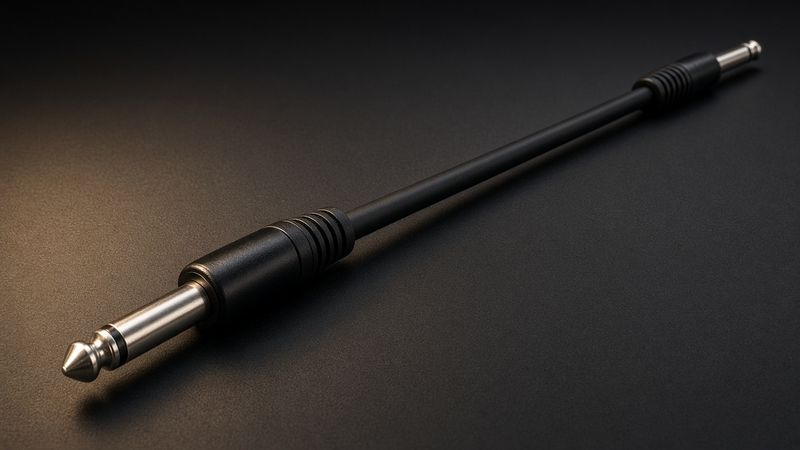
Plug in a different cable and wiggle each end while holding a note. If the noise disappears, the old cable is the culprit - usually a broken conductor next to a plug, where cables flex most. Check your cable maker's warranty before you buy a replacement. If you do need one, these three catalog cables have maker-verified prices and cover budget, mid and premium:
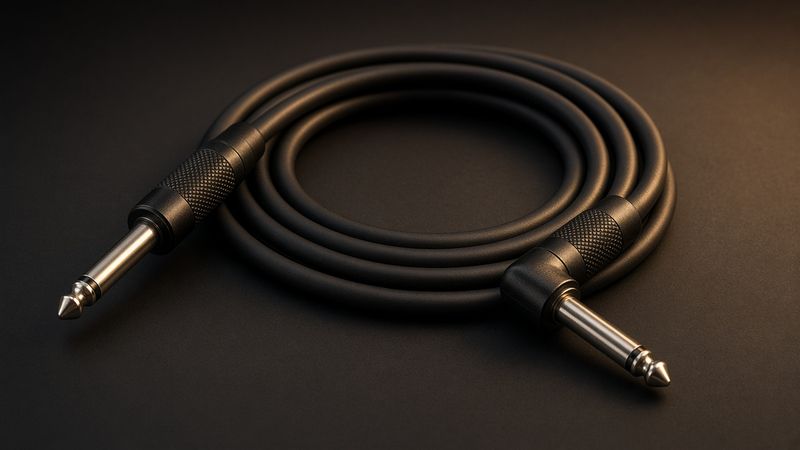
Illustration - AI-generated, not a photo of the exact product.
StarterErnie Ball Flex Instrument Cable, 10ft
A budget-friendly main cable that is easy to coil and carry
$22.99
Manufacturer/retailer list price (not an Amazon price): Ernie Ball official cable listing, 10ft - checked 2026-10-18 - checked 2026-10-18. Confirm before buying.
10ft flexible-jacket instrument cable (per Ernie Ball)
Maker/retailer source for the price & specs above (citation, not a buy link): Ernie Ball
See price on Amazon
As an Amazon Associate, FretCompare earns from qualifying purchases. Price shown only on Amazon.
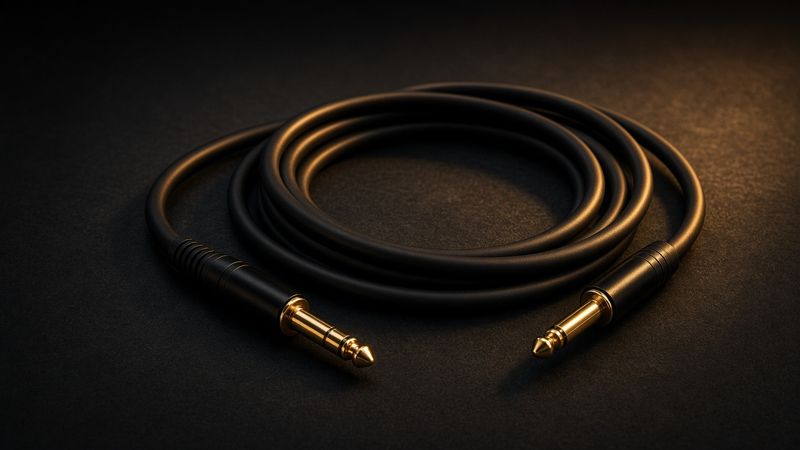
Illustration - AI-generated, not a photo of the exact product.
StarterFender Professional Series Instrument Cable, 10ft
A first good guitar-to-amp cable with published capacitance and lifetime backing
$39.99
Manufacturer/retailer list price (not an Amazon price): Fender official product page, regular price - checked 2026-10-18 - checked 2026-10-18. Confirm before buying.
22 AWG95% OFC spiral shielding8mm jacket26.9 pF/ft capacitancebacked by a lifetime guarantee (per Fender)
Maker/retailer source for the price & specs above (citation, not a buy link): Fender
See price on Amazon
As an Amazon Associate, FretCompare earns from qualifying purchases. Price shown only on Amazon.
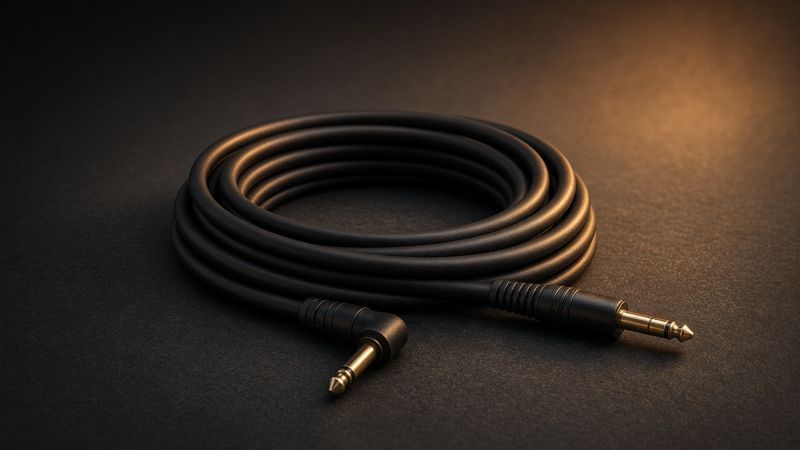
Illustration - AI-generated, not a photo of the exact product.
Step-upD'Addario American Stage Instrument Cable, 10ft
A buy-once main cable for gigging and recording
$57.99
Manufacturer/retailer list price (not an Amazon price): D'Addario official product page, 10ft straight - checked 2026-10-18 - checked 2026-10-18. Confirm before buying.
Premium USA-made instrument cableguaranteed for life (per D'Addario)
Maker/retailer source for the price & specs above (citation, not a buy link): D'Addario
See price on Amazon
As an Amazon Associate, FretCompare earns from qualifying purchases. Price shown only on Amazon.
Prices last checked: Oct 2026 where a verified price is shown on a card - confirm at checkout. Editorial from published facts, not hands-on testing: How we rate.
Step 2: a loose or worn output jack
Signs: crackle when you move the plug in the guitar, the plug feels loose or does not click home, or the jack nut turns with your finger. Fix:
- Unplug everything.
- If the jack sits on a removable plate (Strat-style cup, Les Paul side plate), take the plate screws out and hold the jack body with your fingers so it cannot rotate. If it turns while you tighten, the wires inside twist and can snap off.
- Tighten the nut snugly with a correctly sized wrench or nut driver - not cranked. No access from inside (e.g. a Telecaster cup jack you do not want to remove)? A jack-tightener tool grips the jack from inside while you turn the nut.
- If the plug is loose in a tight jack, the springy tip contact may have lost tension; a very gentle press inward can restore grip. Overdo it and the plug will not go in.
If a wire has broken off or the jack is worn out, replacement means soldering. It is a cheap part and a short tech job; DIY is fine if you can solder - photograph the wiring first.
Step 3: scratchy volume or tone knob
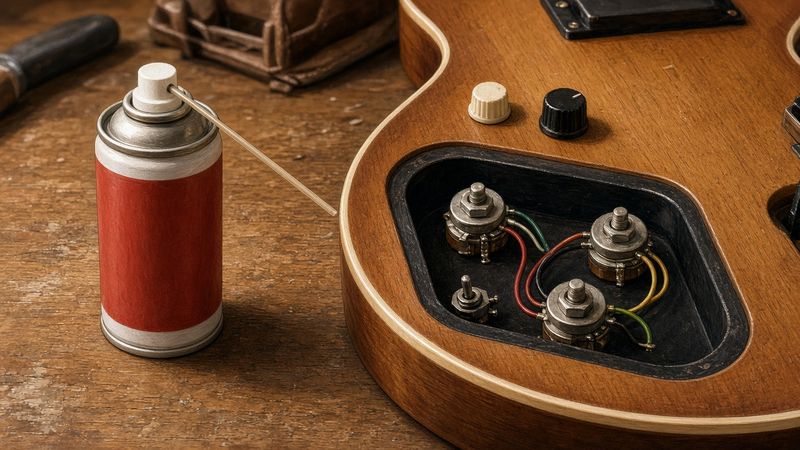
Noise only while a knob turns means dust on the pot's track or oxidation on its metal wiper. First, plug in and sweep the knob fully back and forth a few dozen times. Seymour Duncan's rule of thumb: if the crackle improves, the pot is dirty and worth cleaning; if it stays the same or you feel a click or dead spot, the pot is probably worn and should be replaced. Getting the spray in may mean removing the knob, the control-cavity cover or (on a Strat-style guitar) the pickguard; Fender suggests a paper towel around the area to catch overspray, and not breathing the mist. If the scratch returns, a contact treatment is the standard fix. We checked CAIG's own advice for guitar controls (CAIG makes DeoxIT): unplug everything, pre-prime the spray onto a tissue, put the extension tube into the opening in the pot's casing (from inside the control cavity), give it 2-3 short sprays, then turn the control 10-15 times. For guitars CAIG leans toward the solvent-free D100S-2, because the one thing to avoid is getting solvent on porous surfaces such as unfinished wood; the solvent-carrying D5S-6 flushes heavy grime better and suits jacks, plugs and very dirty controls. CAIG has also published that D5 does not harm carbon-track pots.
Safety: these sprays are flammable until the solvent evaporates (D5) - ventilate, keep away from heat, wipe overspray, and let it dry before plugging in. Use products made for electronic contacts; general-purpose sprays such as standard WD-40 are not pot treatments. If a pot still crackles or feels gritty after treatment, it is worn - replacement is a solder job for a tech or a confident DIYer. Match the replacement's resistance and taper: as a general pattern, single-coil guitars typically use 250k pots and humbucker guitars 500k, with audio taper for volume - check what your guitar has before ordering.
Illustration - AI-generated, not a photo of the exact product.
StarterCAIG DeoxIT D100S-2 Contact Cleaner (100% spray, 2oz)
Scratchy volume/tone pots and switches on a guitar - CAIG's own suggestion for guitar controls because it has no solvent to get on wood
No list price listed here - we only publish prices we verified on a manufacturer/retailer page. Check the maker and Amazon for current pricing.
Metered one-shot spray100% DeoxIT with no solvent carrier; deoxidizeslubricates and protects contacts; manufacturer listing says it will not harm plastics (per CAIG/Hosa)
Maker/retailer source for the price & specs above (citation, not a buy link): CAIG
See price on Amazon
As an Amazon Associate, FretCompare earns from qualifying purchases. Price shown only on Amazon.
Illustration - AI-generated, not a photo of the exact product.
StarterCAIG DeoxIT D5S-6 Contact Cleaner Spray (5oz)
Heavily grimy jacks, plugs and controls that need flushing - CAIG's pick when there is a lot of dirt; keep it off unfinished wood
No list price listed here - we only publish prices we verified on a manufacturer/retailer page. Check the maker and Amazon for current pricing.
5% DeoxIT with a mineral-spirits flushing solvent; for metal contactsjacks and plugs; flammable until the solvent evaporates (per CAIG)
Maker/retailer source for the price & specs above (citation, not a buy link): CAIG
See price on Amazon
As an Amazon Associate, FretCompare earns from qualifying purchases. Price shown only on Amazon.
Prices last checked: Oct 2026 where a verified price is shown on a card - confirm at checkout. Editorial from published facts, not hands-on testing: How we rate.
Still crackling? Other causes
- Pickup selector switch: crackle when changing positions - same cleaning logic as pots.
- Pedals and patch cables: bypass all pedals, then test patch cables one at a time (see the cables guide).
- The amp: if every guitar and cable crackles in one amp, the amp needs a tech.
Sources checked Oct 19, 2026: Fender on fixing a loose instrument jack, CAIG knowledge-base answer on guitar volume/tone controls and its D5 carbon-pot note, Seymour Duncan on worn or dirty pots, Fender on cleaning pots and switches.
FAQ
Why is my guitar making a crackling noise?
Most often a damaged cable, then a loose or worn output jack, then a dirty volume or tone pot. Swap the cable first, then wiggle-test the jack, then turn each knob.
How do I tighten a guitar output jack?
Unplug, then stop the jack body from turning (hold it from inside the plate if you can) while you snug the nut with a correctly sized wrench. If the jack turns, the wires twist and can break.
How do I fix a scratchy volume knob?
Sweep it fully back and forth a few dozen times. If that fails, unplug, spray a contact treatment such as DeoxIT 2-3 times into the pot's casing opening, and turn the knob 10-15 times (CAIG's procedure). Keep solvent sprays off unfinished wood.
Can I use WD-40 on guitar pots?
Standard WD-40 is not a potentiometer treatment. Use a product made for electronic contacts, such as DeoxIT, and follow its label.
Is a crackling amp dangerous?
Do not open it - amps can hold dangerous voltages even unplugged. If the crackle follows the amp across guitars and cables, take it to a tech.
Signal-chain help: Cables guide - Amps - Replacement parts - Guitar sounds dull
 ILLUSTRATION