What Should Your First Guitar Pedal Be? (Maybe Not a Pedal at All)
The honest answer depends on your amp. Many modern practice amps already have drive, delay, reverb and more built in - so before you buy anything, check what yours does. If you still want a pedal, there is a sensible order.
Editorial guide built from manufacturer instructions and specs - not hands-on testing. Product cards link to Amazon; we never show Amazon prices here.
Quick answer
1. Check your amp: modeling amps such as the Boss Katana and Fender Mustang LT already include drive and effects, so you may not need a pedal yet. 2. If you play with others or on stage, a pedal tuner is the most useful first pedal. 3. For sound, start with one gain pedal - an overdrive for bluesy crunch on a clean amp, or a distortion for rock and punk. Add modulation and delay later.
Take the lesson finder quiz
Prices last checked: Oct 2026 where a verified price is shown on a card - confirm at checkout. Editorial from published facts, not hands-on testing: How we rate.
Step 1: check what your amp already does
Look at your amp's controls or manual. If it has channels or models labelled crunch, lead or drive, plus reverb or delay, you already have the core sounds. Boss Katana and Fender Mustang LT amps are examples with effects built in. A pedal makes most sense when your amp is a simple clean amp (one channel, no effects) - see practice amps and amps.
Step 2: the order most players buy in
- Tuner pedal - mutes your signal while tuning and is easy to read on a dark stage. If you only practice at home, a clip-on or our free online tuner does the job; see clip-on vs pedal vs app.
- One gain pedal - overdrive (gentle, responsive, cleans up when you turn your guitar's volume down) or distortion (thicker, more saturated).
- Then delay or reverb, then modulation (chorus, phaser). A multi-effects unit is a good alternative if you are unsure what you like.
Pedals that directly answer the question
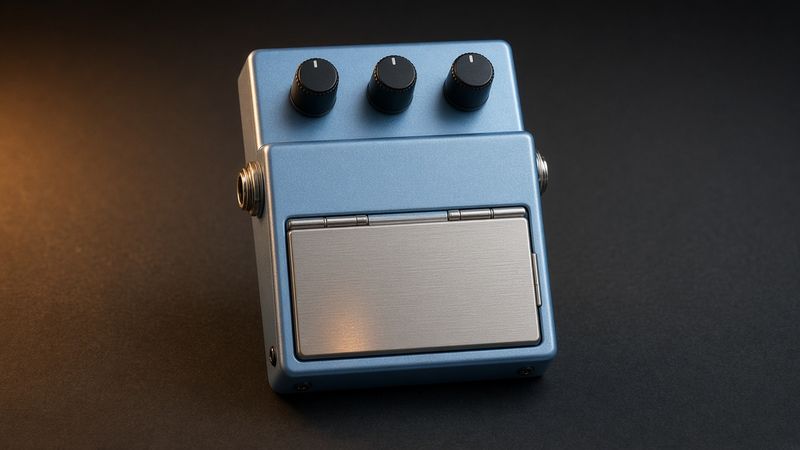
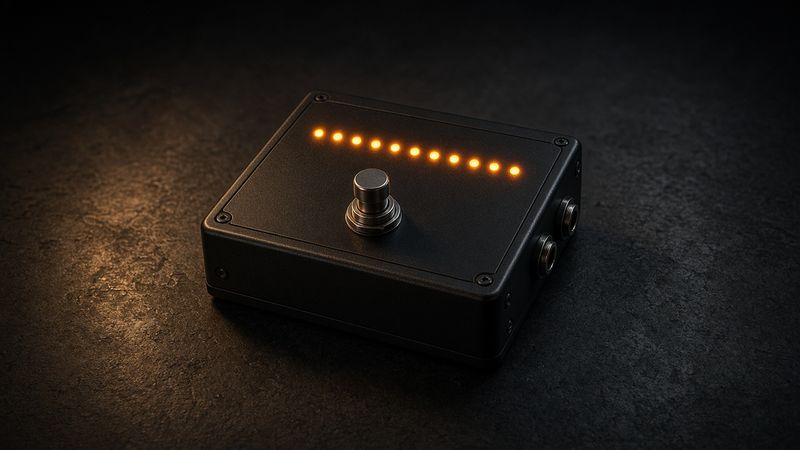
- Boss TU-3 - pedal tuner, output mutes when engaged, +/-1 cent accuracy (per Boss).
- Boss BD-2 Blues Driver - overdrive with Drive, Tone and Level; cleans up with your guitar's volume knob.
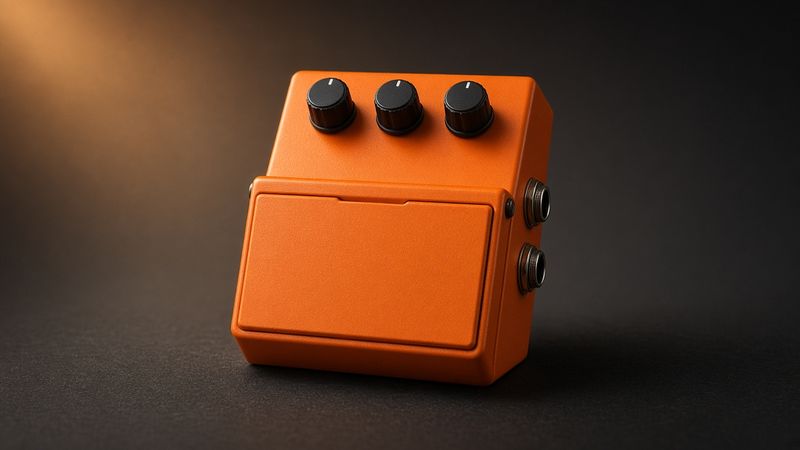
- Boss DS-1 - the classic orange distortion, Distortion/Tone/Level, for rock and punk.
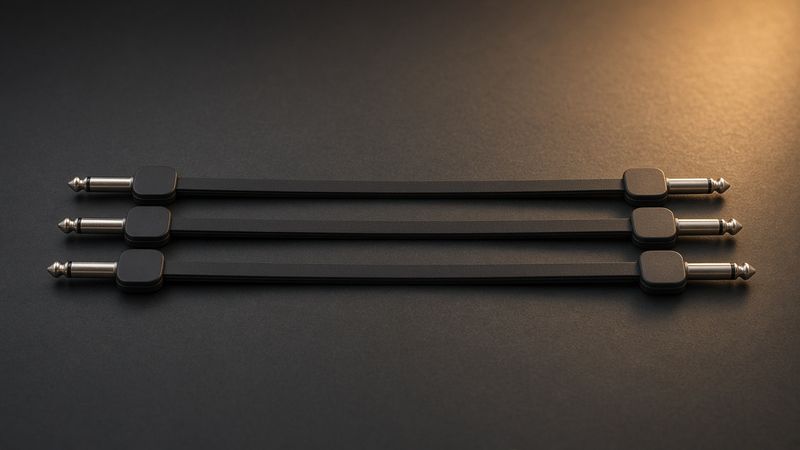
- Ernie Ball 6in patch cables - only needed once you chain two or more pedals.
Illustration - AI-generated, not a photo of the exact product.
SeriousBoss TU-3 Chromatic Tuner Pedal
The stage standard: silent tuning between songs on a pedalboard - overkill for day one, perfect once you play out
No list price listed here - we only publish prices we verified on a manufacturer/retailer page. Check the maker and Amazon for current pricing.
Pedal tuner21-segment LED meter+/-1 cent accuracychromatic plus guitar/bass modesoutput mutes when engaged (per Boss)
Maker/retailer source for the price & specs above (citation, not a buy link): Boss
See price on Amazon
As an Amazon Associate, FretCompare earns from qualifying purchases. Price shown only on Amazon.
Illustration - AI-generated, not a photo of the exact product.
Step-upBoss BD-2 Blues Driver
Edge-of-breakup blues and rock overdrive
No list price listed here - we only publish prices we verified on a manufacturer/retailer page. Check the maker and Amazon for current pricing.
DriveTone and Level; tube-like overdrive that cleans up with your volume knob
Maker/retailer source for the price & specs above (citation, not a buy link): Boss
See price on Amazon
As an Amazon Associate, FretCompare earns from qualifying purchases. Price shown only on Amazon.
Illustration - AI-generated, not a photo of the exact product.
StarterBoss DS-1 Distortion
First distortion pedal - rock crunch in one knob twist
No list price listed here - we only publish prices we verified on a manufacturer/retailer page. Check the maker and Amazon for current pricing.
DistortionTone and Level controls; the classic orange distortion since 1978
Maker/retailer source for the price & specs above (citation, not a buy link): Boss
See price on Amazon
As an Amazon Associate, FretCompare earns from qualifying purchases. Price shown only on Amazon.
Illustration - AI-generated, not a photo of the exact product.
StarterErnie Ball Patch Cables, 6in (3-Pack)
Linking pedals on a first pedalboard without cable spaghetti
$21.99
Manufacturer/retailer list price (not an Amazon price): Ernie Ball official patch cable listing, 6in 3-pack - checked 2026-10-18 - checked 2026-10-18. Confirm before buying.
Six-inch pedalboard patch cablesthree per pack (per Ernie Ball)
Maker/retailer source for the price & specs above (citation, not a buy link): Ernie Ball
See price on Amazon
As an Amazon Associate, FretCompare earns from qualifying purchases. Price shown only on Amazon.
Prices last checked: Oct 2026 where a verified price is shown on a card - confirm at checkout. Editorial from published facts, not hands-on testing: How we rate.
How to hook up your first pedal
- Turn the amp volume down (or off) before plugging or unplugging.
- Guitar cable from your guitar into the pedal's input (usually the right-hand jack).
- Second cable from the pedal's output into the amp's input.
- Power: a 9V battery or the correct power supply for that pedal - check the polarity and voltage on the pedal; Boss compact pedals use 9V centre-negative. A wrong supply can damage a pedal.
- Start with all knobs at noon, then adjust Level so the pedal on and off are similar in volume.
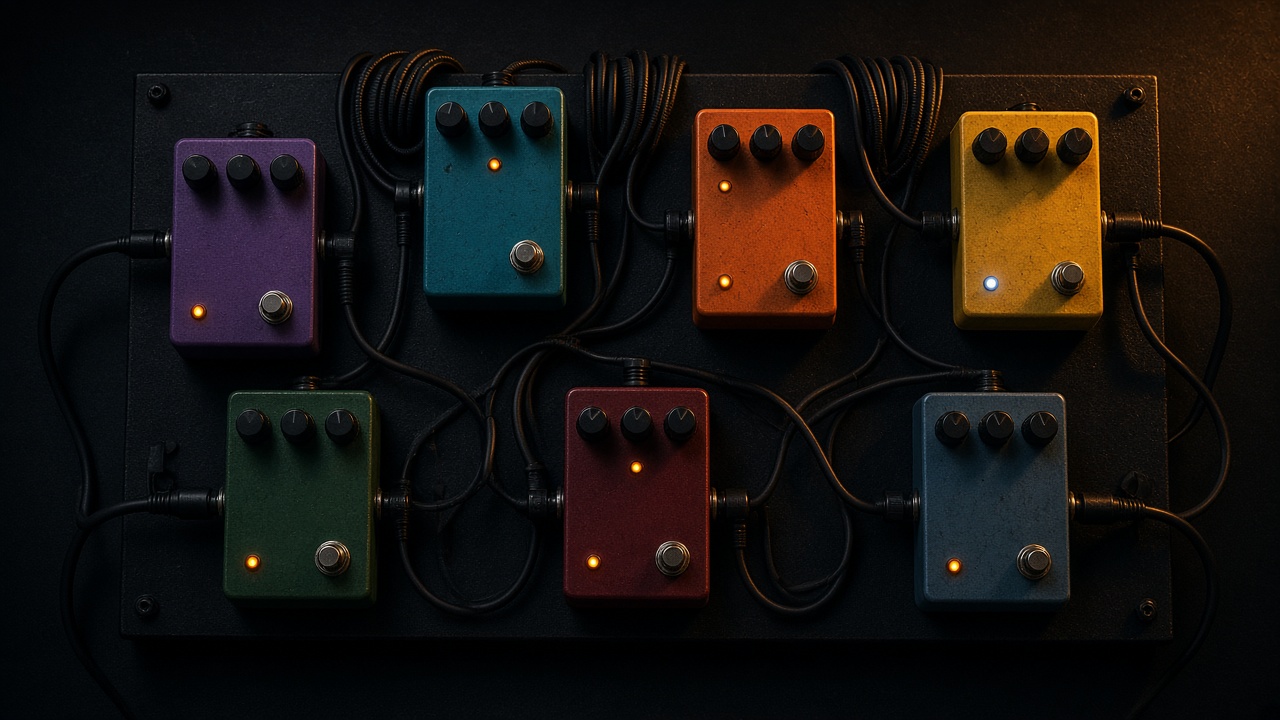
- With several pedals, a common starting order is tuner - drive/distortion - modulation - delay - reverb.
Safety: unplug the input cable from battery-powered pedals when finished - the input jack switches the battery on, so a left-in cable drains it. Keep volume low when trying distortion at first: gain pedals are loud.
FAQ
What is the best first guitar pedal?
If you play with others, a tuner pedal. For sound, one gain pedal - overdrive or distortion - unless your amp already has drive built in.
Do I need pedals as a beginner?
No. A practice amp with built-in drive and effects covers the basics. Buy a pedal when you know what sound is missing.
Overdrive or distortion first?
Overdrive suits blues, classic rock and players who want a dynamic tone on a clean amp. Distortion suits heavier rock and punk.
Can I use a pedal with headphones?
Yes, if your amp or headphone amp takes a guitar-level input; the pedal goes between the guitar and the amp as usual.
More fix-it and buying guides: Guitars for small hands - Your first pedal - Travel guitars - Clean a guitar body - Are wall hangers safe? - Floyd Rose won't stay in tune - Put on a strap - Sounds bad even when tuned - Acoustic guitar crack - Do you need a case?
Related: Pedals - Guitar cables - Play electric without an amp
Sources checked Oct 19, 2026: Boss product pages for TU-3, BD-2 and DS-1, Ernie Ball patch cable page, Boss Katana and Fender Mustang LT feature pages, current top Google guides. Safety: correct pedal power supply only; lower volume before plugging in.
 ILLUSTRATION