Guitar Strings Too Hard to Press Down? Check These Four Things
Every beginner finds strings hard at first, but sometimes the guitar is making it harder than it needs to be. This page is a quick router: four checks, in the order that most often finds the problem, each linking to the full fix.
Editorial guide built from manufacturer instructions and specs - not hands-on testing. Product cards link to Amazon; we never show Amazon prices here.
Quick answer
1. Action (string height) too high - measure it; a setup fixes it. 2. Strings heavy for you - acoustic 12-53 'light' sets feel firmer than 11-52 or 10-47 sets; electric 9s are lighter than 10s. 3. Nut slots too high - if the first few frets are hardest, it is often the nut, a tech job. 4. Technique - press just behind the fret with the fingertip, using the least pressure that rings clean. Fingertips also toughen with regular short practice.
Take the lesson finder quiz
Prices last checked: Oct 2026 where a verified price is shown on a card - confirm at checkout. Editorial from published facts, not hands-on testing: How we rate.
Check 1: is the action too high?
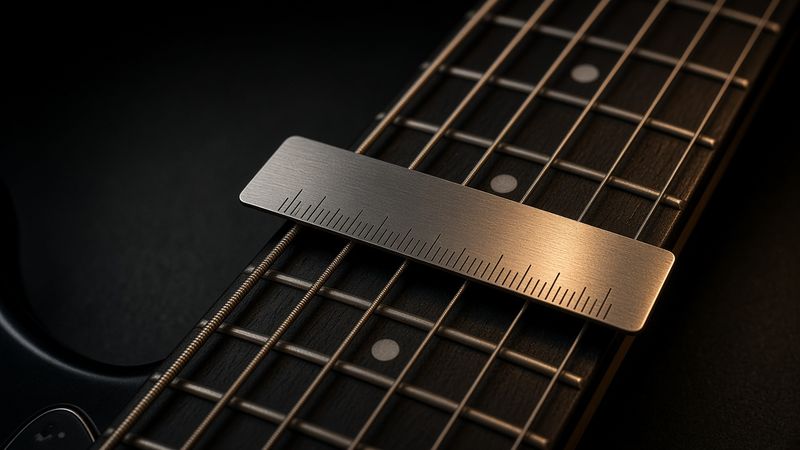
Action is the string height above the frets. High action is a very common reason a guitar feels hard to play, especially on inexpensive acoustics straight from the box. Measure at the 12th fret with an action gauge or ruler and compare with the typical specs in our high action fix, which explains neck relief, saddle height and what is a tech job. Yamaha's own advice for an easier-playing acoustic is lighter strings plus a setup to lower the action.
Illustration - AI-generated, not a photo of the exact product.
StarterMusicNomad Precision String Action Gauge Ruler (MN602)
How the 12th-fret check becomes a measurement: lay it at the 12th fret, read each string's height, and compare against your maker's published spec for your model - never against a universal number.
No list price listed here - we only publish prices we verified on a manufacturer/retailer page. Check the maker and Amazon for current pricing.
Precision string action gauge ruler for measuring string height (standard and metric variantsMN602; per MusicNomad)
Maker/retailer source for the price & specs above (citation, not a buy link): MusicNomad
See price on Amazon
As an Amazon Associate, FretCompare earns from qualifying purchases. Price shown only on Amazon.
Prices last checked: Oct 2026 where a verified price is shown on a card - confirm at checkout. Editorial from published facts, not hands-on testing: How we rate.
Check 2: are the strings heavy for you?
Heavier gauges need more tension to reach pitch, so they feel stiffer. On acoustic, 12-53 'light' is a common factory gauge; 11-52 'custom light' and 10-47 'extra light' sets are noticeably easier, at some cost in volume and fullness. On electric, a 9-42 set is easier than 10-46. A big gauge change can alter the setup, so a tech may need to adjust afterwards. Help choosing: what gauge strings for beginners, light vs medium and the string gauge finder.
Illustration - AI-generated, not a photo of the exact product.
Our pickElixir Electric NANOWEB Super Light .009-.042 (12002)
Our pick for electric beginners: easy bends, soft on fingertips, and coated life means fewer changes
No list price listed here - we only publish prices we verified on a manufacturer/retailer page. Check the maker and Amazon for current pricing.
Nickel-plated steelultra-thin NANOWEB coatingbright tonesmooth feel (per Elixir)
Maker/retailer source for the price & specs above (citation, not a buy link): Elixir
See price on Amazon
As an Amazon Associate, FretCompare earns from qualifying purchases. Price shown only on Amazon.
Prices last checked: Oct 2026 where a verified price is shown on a card - confirm at checkout. Editorial from published facts, not hands-on testing: How we rate.
Check 3: is it worst near the nut?
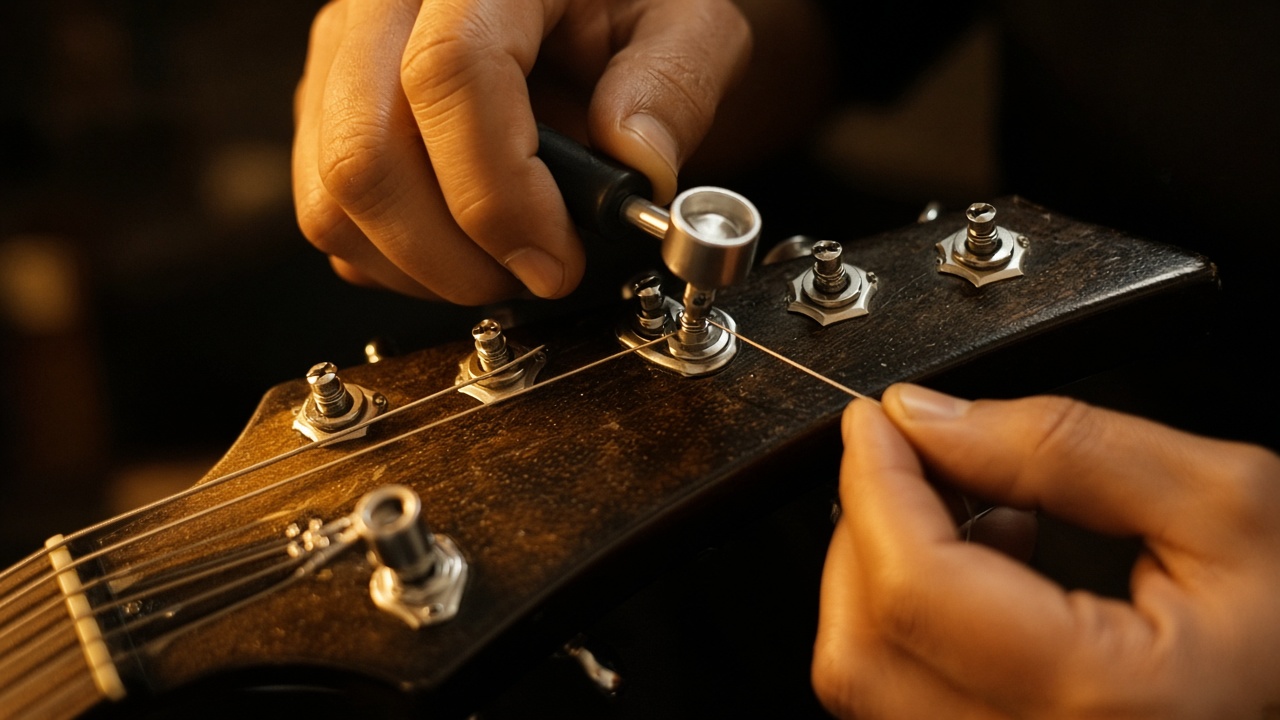
If chords at the first few frets are hardest and it gets easier higher up, the nut slots may be cut too high. Quick look: fret a string at the 3rd fret and check the gap between the string and the 1st fret - it should be very small. Nut slot work is irreversible, so it belongs with a tech; it is usually part of a standard setup.
Check 4: technique
- Press with the tip of the finger, just behind the fret wire, not in the middle of the space.
- Keep the thumb behind the neck, roughly behind your fingers, rather than squeezing like a clamp.
- Least-pressure test: fret a note and slowly ease off until it buzzes, then add just enough to ring clean. Most beginners press much harder than necessary.
- Keep sessions short and frequent; fingertips toughen with regular playing. If something hurts sharply, stop and rest.
More on getting through the first weeks: your first 30 days and first chords.
Nylon strings and other options
Nylon-string classical guitars are softer under the fingers, though their wider necks suit some hands better than others - see nylon vs steel. A capo moves chords up the neck where the frets are closer together; it is a short-term help, not a fix for high action.
FAQ
Are my guitar strings too hard to press?
If you need a lot of pressure everywhere, check the action at the 12th fret and your string gauge first. If it is hardest near the nut, the nut slots may be high.
Why are acoustic guitar strings so hard to press?
Acoustic strings are heavier and higher tension than electric strings, and many acoustics leave the factory with high action. Lighter strings and a setup help most.
Do lighter strings make guitar easier to play?
Yes - lighter gauges need less tension to reach pitch, so they are easier to fret. They trade some volume and fullness.
Will strings get easier to press over time?
Your fingertips toughen and technique improves with regular practice, but a guitar with high action stays hard to play until it is set up.
Fix-it guides: Restring a classical - Capo out of tune - Install locking tuners - Loose tuning pegs - Stuck bridge pins - Do you need a string winder? - Best fretboard oil - Hum stops when you touch strings - Strings too hard to press - Install strap locks
Setup help: High action fix - Fret buzz fix - Strings - Best strings for beginners
Sources checked Oct 19, 2026: Yamaha on making an acoustic easier to play, MusicRadar on acoustic string gauges, StewMac on adjusting acoustic action, Fender string guide.
 ILLUSTRATION