Affiliate disclosure: product buttons link to Amazon. As an Amazon Associate, FretCompare earns from qualifying purchases, at no extra cost to you. It never changes which products we pick, and we never show Amazon prices. Details
Learning Guitar Over 50 (and With Arthritis): A Practical Guide
Quick answer: yes, you can learn guitar at 50, 60, 70 or later - adult learners have advantages like patience, focus and knowing what music they love. The keys are a comfortable guitar (a well set-up instrument with light strings, or a nylon-string guitar), short, frequent practice (15-20 minutes, once or twice a day), easy chord shapes and a capo instead of early barre chords, and stopping when pain is sharp or getting worse. If you have arthritis, ask your doctor, physiotherapist or hand therapist how to fit playing into your plan - NHS guidance on hand osteoarthritis encourages regular, paced movement, but your situation is individual.
Editorial guide from published sources (NHS, Arthritis Foundation, a hand-therapy research review and guitar makers - see Sources) plus common learner experience. Not hands-on testing and not medical advice.
Last verified Oct 2026. Facts on this page come from the official pages listed under Sources checked. Editorial guidance, not hands-on testing. See the sources.
Not medical advice. FretCompare is a guitar-learning site, not a medical source. Andrew is a guitarist and audio engineer, not a clinician. If you have pain that is sharp, gets worse, lasts after you stop, or comes with numbness, tingling, swelling or weakness, stop playing and talk to a doctor, physiotherapist or hand therapist.
Can you learn guitar at 50, 60 or older?
Yes. Guitar forums are full of people who started in their 50s and 60s, and the honest pattern is the same for every age: steady short practice beats talent. Some things are harder - fingertips may be slower to toughen, joints can be stiffer, and arthritis needs managing - but none of these stops people from playing songs they love. One learner on r/Guitar who started lessons at 60 with moderate arthritis described guitar as good for both coordination and the brain; another started at 50 with arthritis and found that warming up before and after helped.
What matters most is setting the right goal. "Play five songs I love for friends and family by next summer" is achievable for almost anyone who practises most days. "Shred like a teenager in six months" isn't realistic at any age.
What older beginners often do better
Patience and focus. Adults can practise deliberately - slowly, with attention - which is the fastest way to improve.
Musical memory. Decades of listening means you already know how songs should sound, which helps with rhythm and playing by ear (see playing by ear).
Time and routine. Many retirees can fit two short sessions into a day, which is ideal for fingertips and joints.
Knowing what you want. If you love folk, country, hymns or classic rock, you can skip what you don't need.
Choosing a guitar that's kind to your hands
For older beginners - and especially anyone with hand pain - the most important choice is how easy the guitar is to press, not how it looks.
Option
Why it can help
Trade-offs
Nylon-string (classical) guitar
Lowest string tension and softest strings; far gentler on fingertips. A Reddit commenter with arthritis-friendly advice put it simply: less pressure to fret and less cramped chord fingerings.
Wider neck, which some find a stretch; mellow sound rather than bright folk/pop.
Steel-string acoustic with light strings and a setup
The classic singer-songwriter sound; custom-light strings and low action make a big difference.
Still more pressure than nylon; needs a setup check.
Electric guitar with light strings
Thin strings, low action and small frets are often the easiest to press. Short-scale models (around 24 in) bring frets closer together.
Needs an amp or headphone amp; different sound.
Smaller-bodied guitar
A concert or travel-size body reduces shoulder and arm reach, helpful with shoulder stiffness.
Strings, action and a setup: the cheapest comfort upgrade
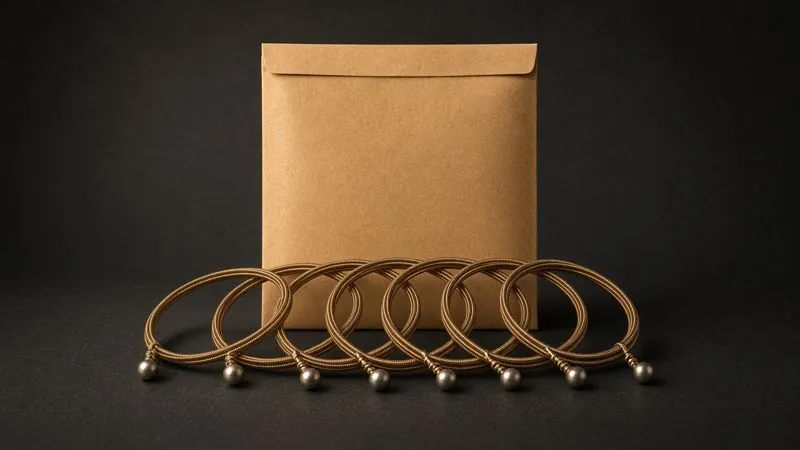
Folkstrings' arthritis guide makes the same point as many teachers: try lighter strings first, then have the action lowered. Moving from a medium acoustic set (.013-.056) to an extra-light set (.010-.047) is a big drop in fretting pressure. A professional setup lowers the strings to the lowest height that doesn't buzz; tell the technician you have joint pain and want the easiest playability. Read what a guitar setup is and what it typically costs.
Some players also tune down a half step (to E-flat). One r/guitarlessons commenter suggested this for older hands: it slackens the strings slightly and can suit a lower singing voice. Use a capo at the 1st fret if you need to match standard-pitch recordings.
Playing guitar with arthritis: practical adaptations
Arthritis affects everyone differently, so treat these as ideas to discuss with your health professional, not a treatment plan.
Keep moving, paced. NHS inform's guidance for hand osteoarthritis encourages regular movement and a gradual return to activity, with small amounts throughout the day. NHS occupational therapy advice talks about pacing, planning and good hand positioning to avoid over-using small finger and thumb joints.
Don't play through a flare. University Hospitals Sussex NHS advice for hand OA exercises says not to exercise joints that are actively inflamed (red, hot, swollen and painful) - gentle stretching only during a flare. Treat guitar the same way.
Relative rest, not total rest. A hand-therapy review on instrumentalists (PubMed) recommends relative rather than absolute rest for playing-related problems, and returning gradually with simple, soft music, dropping back if pain develops.
Use fewer fingers. Many easy chord versions use two or three fingers (see easier chords).
Use a capo to move songs to keys with easy shapes rather than barre chords.
Try fingerpicking or a thumb pick if gripping a flat pick hurts; Folkstrings suggests finger and thumb picks for some players.
Ask about splints or aids. The Arthritis Foundation describes occupational therapists recommending splints and joint-sparing tools; only wear a splint as directed.
How much discomfort is OK?
NHS inform suggests rating pain from 0 to 10 during hand exercises and aiming to stay within 0-5: 0-3 minimal, 4-5 acceptable, 6-10 excessive. If pain rises above that, reduce the number of repetitions, slow down or rest longer. It also says exercise should not make your pain worse overall, and you should be no worse the morning after. University Hospitals Sussex adds that if your hands are painful for more than half an hour after exercising, you may have done too much.
Joint ache that settles within half an hour and is no worse the next morning: probably OK. Keep sessions short.
Pain that climbs during playing, lasts for hours, comes with swelling, or is worse the next day: stop, rest and speak to a professional before continuing.
Numbness, tingling or weakness: stop and get advice.
A gentle 3-minute warm-up
Cold, stiff hands feel worse. This is a simple, gentle routine based on common advice from hand-care and guitar sources; skip anything that hurts, and follow your therapist's exercises if you have them.
Hold your hands in warm (not hot) water for a minute, or rub them together.
Make a loose, gentle fist and open the hand fully - 5 times.
Touch your thumb to each fingertip in turn, making an "O" - 3 rounds.
Slowly circle your wrists both ways - 5 times.
Play single notes slowly on one string for a minute before any chords.
Easier chords, capos and open tunings
You can play hundreds of songs without a single full barre chord.
Start with Em, G, C and D and simplified versions of them - for example a three-finger G and a two-finger Em. Our first chords guide has the shapes.
Use "easy F" or skip it. Our F chord guide starts with one-finger and small versions.
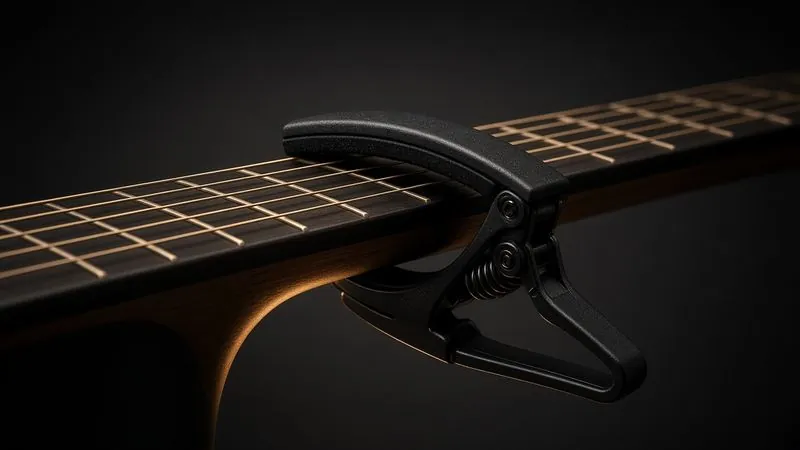
Capo instead of barre chords. A capo lets you play a song in a new key using the same easy shapes. A key in B-flat, for example, is A-shapes with a capo on fret 1.
Open tunings such as open G or open D let you play a major chord with no fingers at all, and a one-finger barre for others. They're common in blues and folk.
Play fewer strings. Strumming only the top three or four strings means fewer fingers and less stretch.
Building finger strength and independence gently
Older hands often feel clumsy at first - fingers move together or won't stretch. That improves with gentle, regular practice rather than force. One r/guitarlessons commenter suggests about 20 minutes a day of slow 1-2-3-4 finger patterns at 60 BPM, aiming for precise, relaxed movement, and says the small finger muscles develop over six to twelve months. A gentler version for sore or arthritic hands:
On one string, place fingers 1, 2, 3 and 4 on frets 5, 6, 7 and 8 (higher up the neck the frets are closer together, so the stretch is smaller).
Play each note slowly with the metronome at 50-60 BPM, lifting fingers only a little.
Do two strings, then stop. Shake out your hand.
Move one fret lower each week only if it stays comfortable.
Stop if a joint starts to ache rather than just feeling tired, and keep the whole exercise to a few minutes.
Strumming a song you know with a simple down-strum pattern
10-13
A little melody on one string, or a new chord shape
13-15
Play something you enjoy, then gently stretch your hands
Do this once or twice a day rather than one long session. After a few weeks, if your hands are happy, extend to 20-30 minutes. NHS hand guidance favours small amounts throughout the day, and the instrumentalist review suggests building practice time up gradually.
Posture, eyesight and comfort
Chair: use a firm chair without arms. A small footstool under one foot raises the guitar so you don't hunch.
Strap while seated to hold the guitar in place without gripping it with your fretting hand.
Neck angle: tilting the neck up slightly lets your fretting wrist stay straighter.
Eyesight: print chord charts large, use a tablet on a music stand at eye level, and add a lamp so you can see the fretboard.
Hearing: a clip-on tuner shows pitch visually - see our clip-on tuner guide.
Lessons that suit adult and older learners
Many adult beginners do well with a mix of a structured online course and occasional in-person check-ins. Video lessons let you pause and repeat as often as you like; a local teacher can spot tension and posture issues. We compare options in best guitar lessons over 40, best guitar lessons for seniors and online vs in-person lessons. If you'd like company, a slow jam or song circle is welcoming to beginners of any age - see your first jam session.
First songs to aim for
Pick slow, familiar songs with two or three chords. Public-domain favourites with our own arrangements:
You don't need to memorise much at first. Keep chord charts and lyric sheets in front of you, learn one song at a time, and repeat it over several days - repetition does the remembering for you. Playing the same five songs well is more satisfying than half-learning twenty.
"I'm too slow at chord changes."
Everyone is slow at first, at any age. Use the one-minute changes drill from our clean chord changes guide and write down your score; it rises steadily. Use songs with fewer changes, and let the strum keep going while your fingers arrive.
"Will I be embarrassed playing for people?"
Start by playing for one friendly person, or record yourself. Song circles and slow jams are full of adults who started late - see your first jam session.
"Am I wasting money if I give up?"
Start with a modest, comfortable guitar, try free lessons first, and upgrade only once you're practising regularly. Our cost of learning guitar page shows realistic budgets.
Staying motivated
Set a song goal - one song to play for family by a date.
Keep the guitar out on a stand, not in its case; you'll pick it up more often.
Track sessions on a calendar - short sessions still count.
Play with others - a friend, grandchild, class or song circle.
Celebrate small wins: your first clean chord change, first full song, first time singing along.
Gear that helps older hands
None of this is required to start, but these three address the most common comfort problems: string pressure on a steel-string acoustic, wanting the gentlest guitar, and avoiding barre chords. Specs are from each maker's page; the button goes to the exact Amazon listing.
ILLUSTRATION
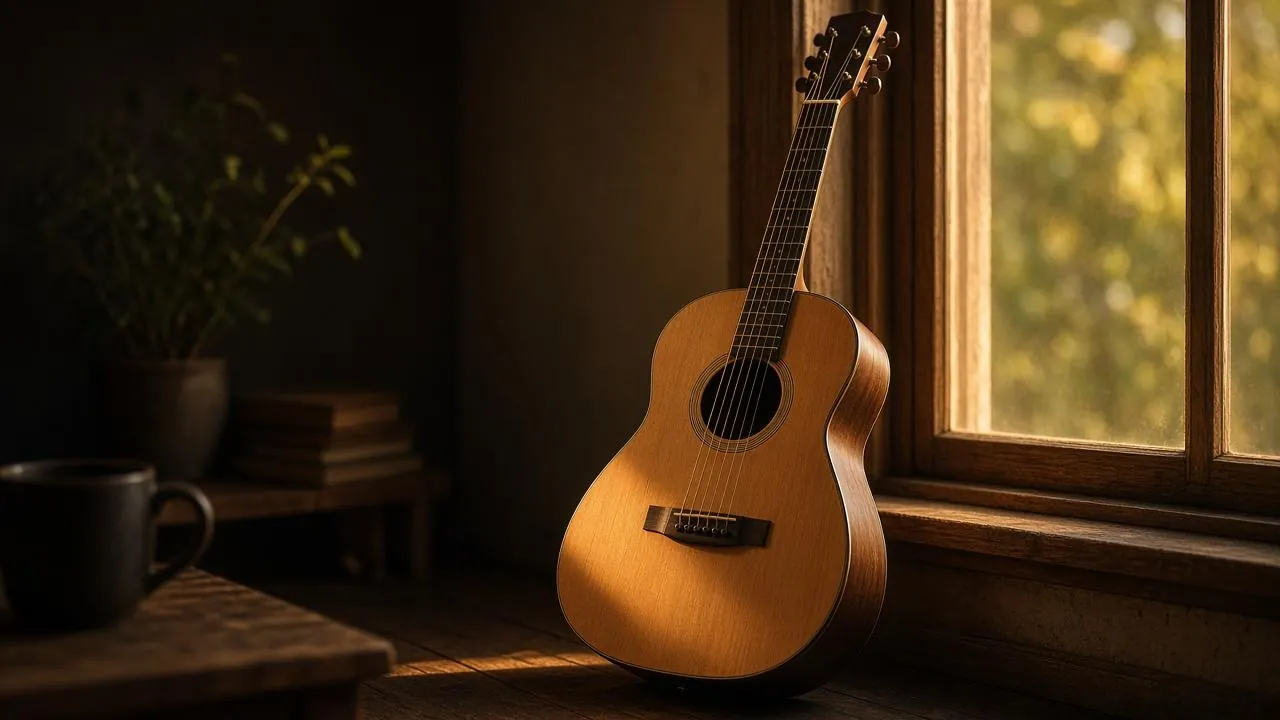
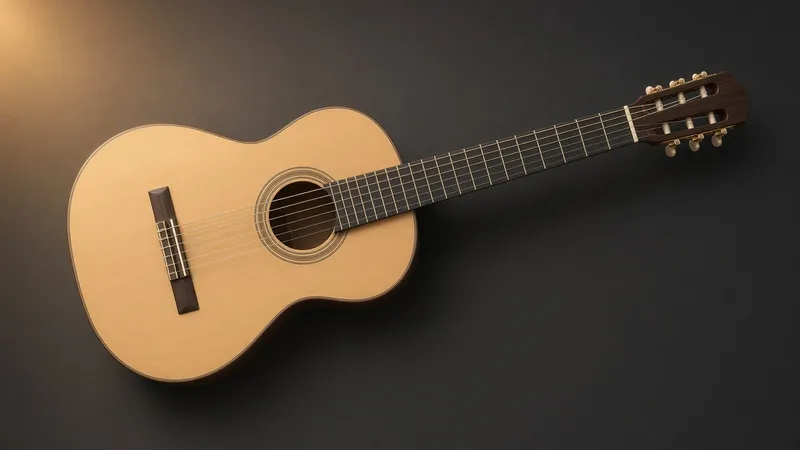
Illustration - AI-generated, not a photo of the exact product.
Starter
Yamaha C40II Classical
Best for Nylon strings: softest on fingertips; classical, folk and fingerstyle starters
As an Amazon Associate, FretCompare earns from qualifying purchases. Price shown only on Amazon.
FAQ
Is 60 too old to learn guitar?
No. Many people start in their 60s and later. Short daily practice, a comfortable guitar and realistic song goals matter far more than age.
Can I play guitar with arthritis?
Many people do, with adaptations: lighter strings, a setup, nylon strings, easier chord shapes, a capo and short sessions. Ask your doctor or hand therapist how it fits your situation, and don't play through a flare.
Is a classical guitar easier for older beginners?
Nylon strings need much less pressure and are gentler on fingertips and joints. The neck is wider, so try one first if your hands are small or stiff.
How long should an older beginner practise?
Start with 15-20 minutes once or twice a day. Build up slowly if your hands feel fine afterwards and the next morning.
Does playing guitar help arthritis?
The evidence is mixed. Gentle movement is generally encouraged for hand osteoarthritis, but guitar is not a treatment. Talk to your health professional.
Should I learn electric or acoustic at 50+?
Whichever matches the music you love. Electrics are often easiest to press; nylon acoustics are gentlest; steel acoustics need light strings and a good setup.
Sources checked
NHS inform: Exercises for osteoarthritis of the hand (pain scale 0-5; small amounts through the day; when to stop) (checked Oct 21 2026): www.nhsinform.scot/illnesses-and-conditions/muscle-bone-and-joints/arm
University Hospitals Sussex NHS: Strengthening exercises for osteoarthritis of the hand (not during active inflammation; half-hour rule) (checked Oct 21 2026): www.uhsussex.nhs.uk/resources/strengthening-exercises-if-you-have-oste
Northamptonshire Healthcare NHS: MSK occupational hand therapy (pacing, planning, hand positioning, aids) (checked Oct 21 2026): www.nhft.nhs.uk/hand/1000/
Arthritis Foundation: Hand therapies for rheumatoid arthritis (splints and occupational therapy) (checked Oct 21 2026): www.arthritis.org/diseases/more-about/hand-therapies-for-rheumatoid-ar
PubMed: Assessing the instrumentalist interface - modifications, ergonomics and maintenance of play (relative rest; gradual return) (checked Oct 21 2026): pubmed.ncbi.nlm.nih.gov/17097488/
Folkstrings: Playing guitar with arthritis (lighter strings, lower action, finger and thumb picks) (checked Oct 21 2026): folkstrings.com/playing-guitar-with-arthritis/
r/Guitar and r/guitarlessons threads from older and arthritic learners (experience, not medical advice) (checked Oct 21 2026): www.reddit.com/r/guitarlessons/comments/1iedk3f/
Not hands-on testing: FretCompare summarises official instructions and published facts. Steps and terms change, so follow the official page if it differs.
Free 7-Day First Chords course - Confirm your email first (Kit sends a confirmation link). Day 1 arrives the next morning (about 9 AM Central), then one short email a day until Day 7: setup, first chords, strumming, a first song. Unsubscribe any time.
 ILLUSTRATION